The Future of Drone Manufacturing Is Being Printed
The global demand for military drones is growing at an unprecedented pace—and with it comes an enormous opportunity for additive manufacturing.
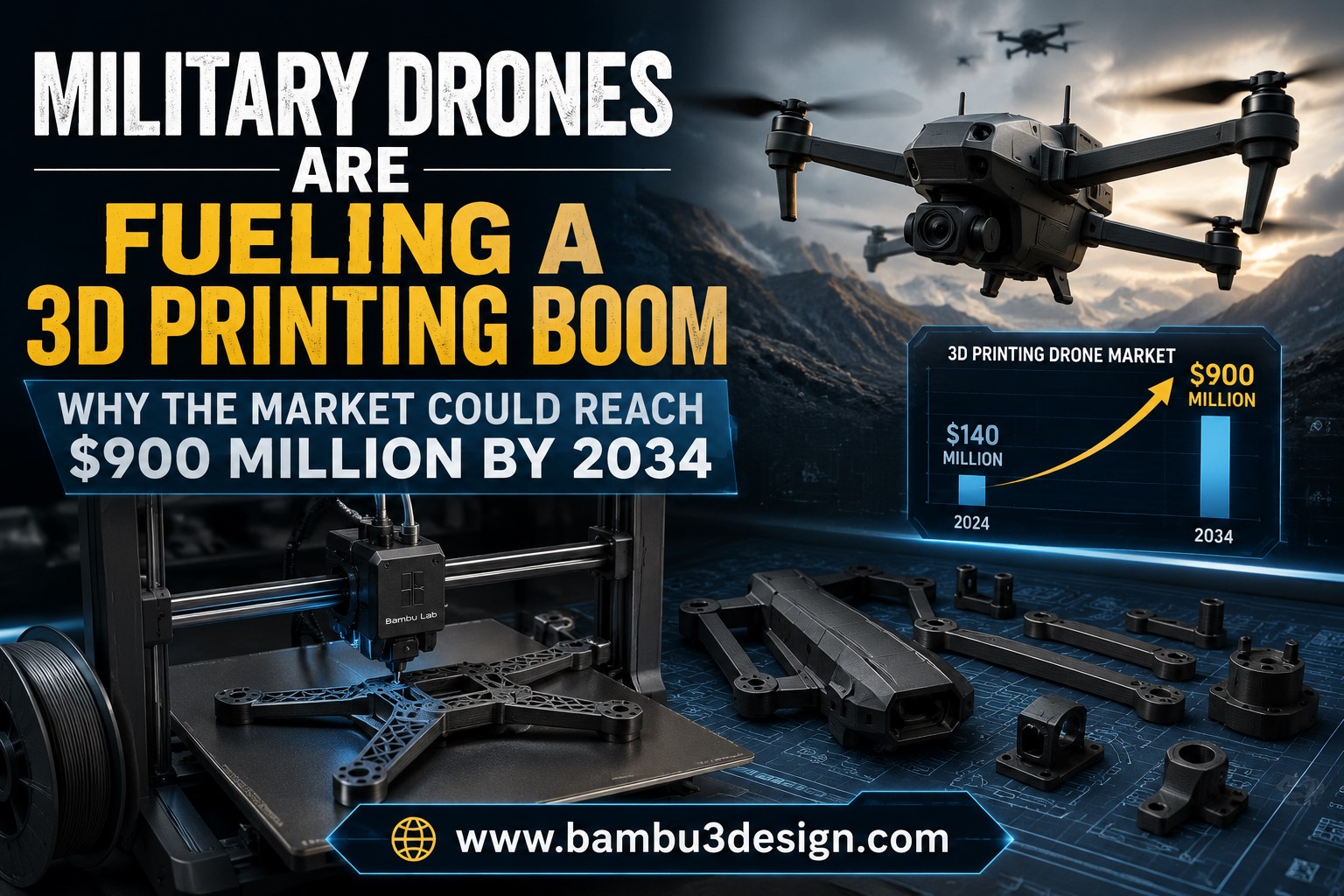
According to a new report from Additive Manufacturing Research, the market for 3D printing in unmanned aerial systems (UAS) is expected to grow from approximately $140 million today to nearly $900 million by 2034, representing more than a sixfold increase.
This rapid growth is largely driven by the military’s increasing need for affordable, disposable, and rapidly manufactured drones.
Why Militaries Need Low-Cost Drones
Modern conflicts have changed how drones are used.
Instead of relying only on expensive long-life aircraft, many armed forces now deploy thousands of inexpensive tactical drones for:
- Intelligence gathering
- Reconnaissance
- Surveillance
- Target acquisition
- One-way attack missions
- Electronic warfare
Because many of these aircraft are designed to be expendable, manufacturing cost has become just as important as performance.
This is where 3D printing offers a major advantage.
Why 3D Printing Makes Sense
Traditional manufacturing often requires expensive molds, tooling, and long production cycles.
3D printing eliminates many of these limitations by allowing manufacturers to:
- Produce parts without tooling
- Quickly modify designs
- Manufacture small production batches
- Print replacement components on demand
- Reduce inventory requirements
For military operations where designs evolve rapidly, this flexibility is extremely valuable.
Which Drone Parts Can Be 3D Printed?
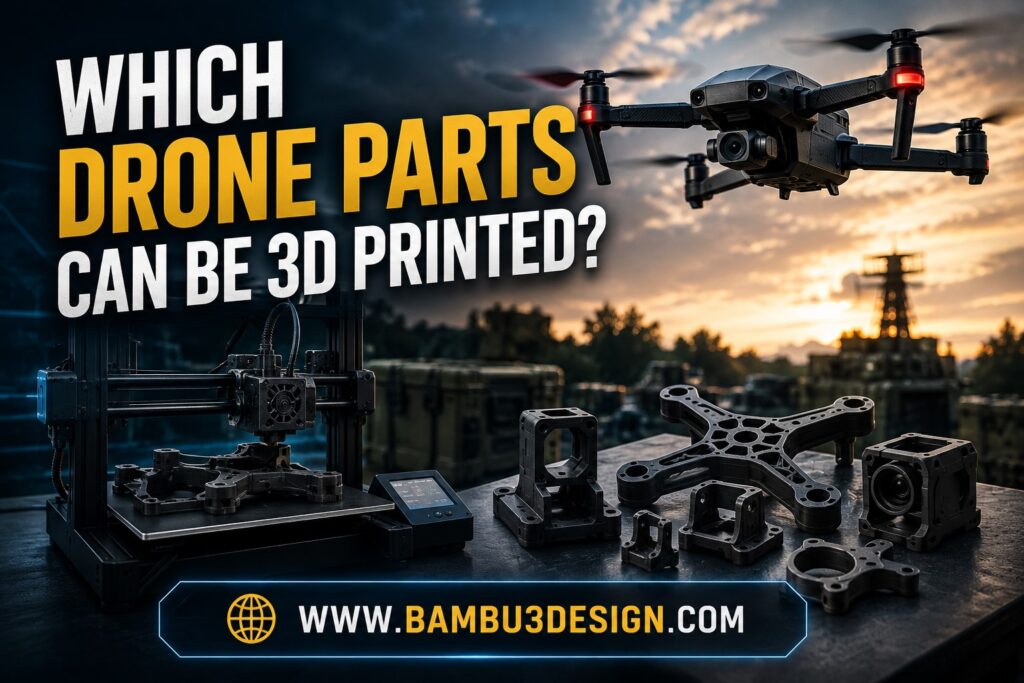
The report highlights numerous applications for additive manufacturing, including:
- Airframes
- Protective housings
- Sensor mounts
- Aerodynamic structures
- Payload interfaces
- Internal ducts
- Tooling
- Spare parts
Many of these components are already being produced using polymer 3D printing technologies.
Polymer Printing Leads the Market
The report predicts that polymer-based 3D printing will remain the dominant manufacturing technology for drones.
Affordable material extrusion (FDM/FFF) systems are particularly attractive because they offer:
- Low manufacturing costs
- Fast production
- Lightweight components
- Easy design modifications
For disposable military drones, polymer printing provides the ideal balance between cost and performance.
3D Printers Are Moving Closer to the Battlefield
One of the most interesting trends identified in the report is distributed manufacturing.
Instead of producing all drone components in centralized factories, manufacturers are increasingly deploying mobile additive manufacturing units closer to operational areas.
This approach allows replacement parts to be printed whenever needed while reducing supply chain delays.
Digital inventories also make it possible to manufacture components directly from design files without storing large numbers of spare parts.
Metal 3D Printing Is Also Growing
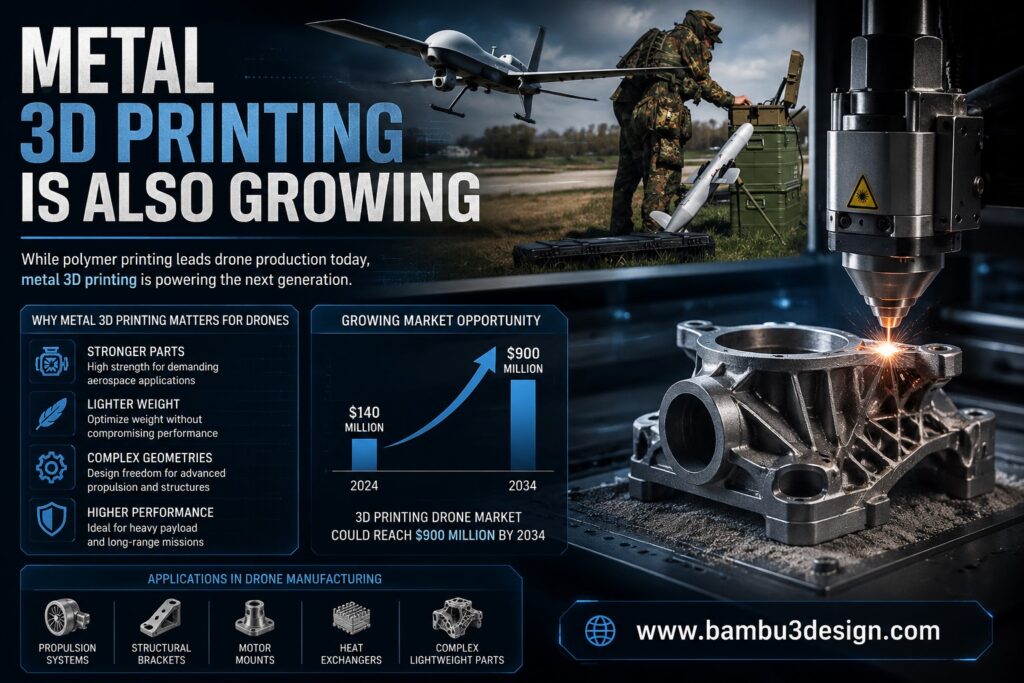
Although polymer printing dominates current drone production, metal additive manufacturing is expected to play an increasingly important role.
Metal powder bed fusion is already being used for:
- Engine components
- Propulsion systems
- Structural brackets
- High-strength lightweight parts
These applications are particularly important for larger drones carrying heavier payloads.
Beyond Military Applications
The report also highlights strong commercial demand for drone 3D printing.
Industries expected to benefit include:
- Infrastructure inspection
- Agriculture
- Mining
- Energy
- Public safety
- Environmental monitoring
- Wildlife research
Customized camera mounts, sensor housings, protective frames, and specialized payload adapters are becoming increasingly common applications.
Supply Chain Transformation
The projected $900 million market includes far more than just printed drone parts.
It also covers:
- 3D printers
- Printing materials
- Manufacturing services
- Software
- Spare part production
- Industrial support services
This indicates that drone manufacturing is becoming one of the fastest-growing application areas for additive manufacturing.
Companies Featured in the Report
The report analyzes several leading companies involved in drone manufacturing and additive manufacturing, including:
- DJI – Consumer and commercial drone manufacturer
- Skydio – AI-powered autonomous drones
- General Atomics – Military UAV manufacturer (MQ-9 Reaper)
- Firestorm Labs – Field-deployable 3D printed drones
- Quantum Systems – Fixed-wing UAV developer
- Markforged – Industrial metal and composite 3D printers
- Nikon SLM Solutions – Metal powder bed fusion systems
- EOS – Industrial additive manufacturing
- Stratasys – Industrial polymer 3D printing
- HP – Multi Jet Fusion 3D printing
- Prusa Research – Desktop FDM 3D printers
Final Thoughts
Military demand is rapidly reshaping the future of drone manufacturing.
As governments seek faster, cheaper, and more flexible production methods, additive manufacturing is becoming a core technology rather than just a prototyping tool.
If current trends continue, 3D printing will play a central role in producing next-generation drones—both on the factory floor and potentially much closer to the battlefield.