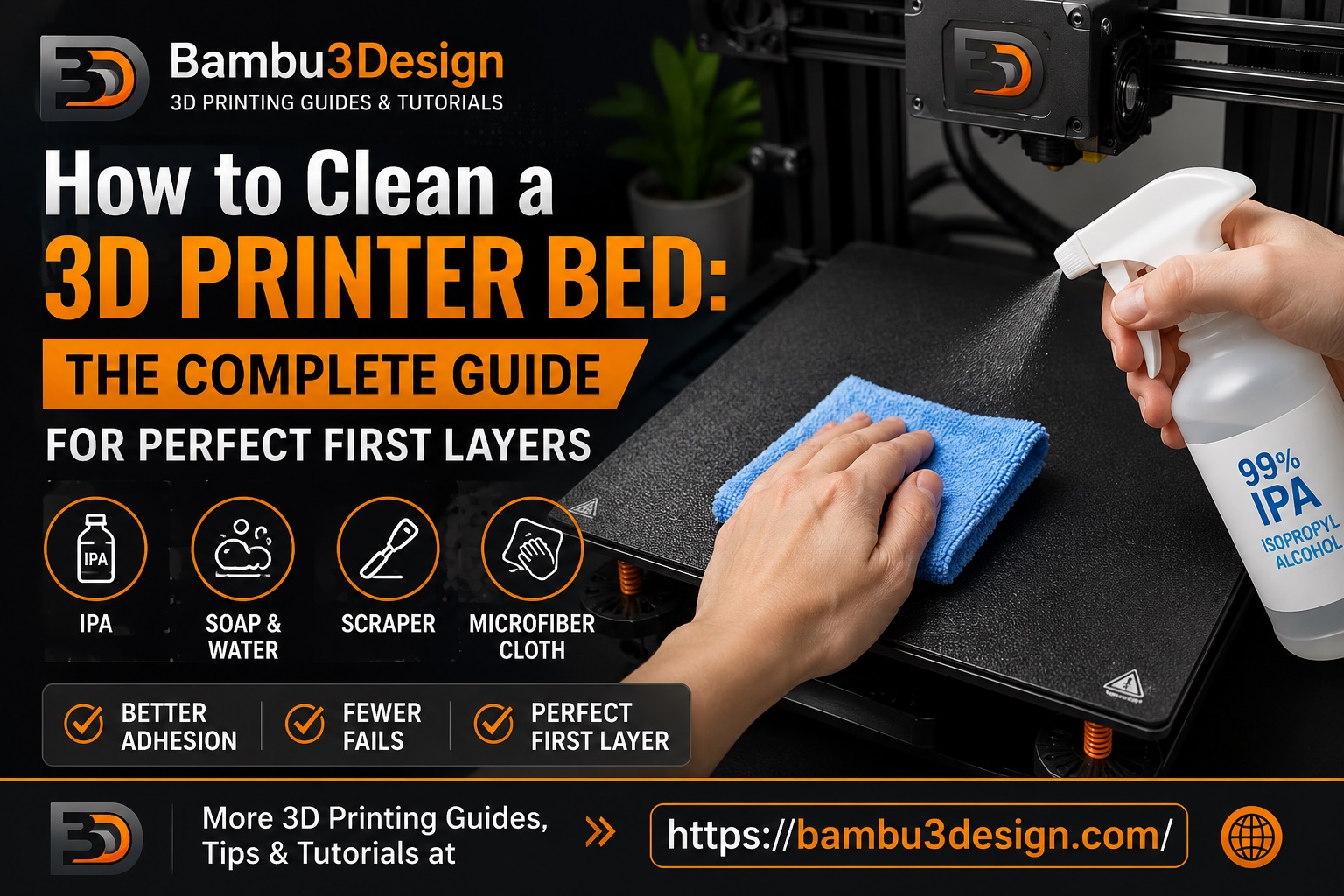
Nothing ruins a 3D print faster than poor bed adhesion. If your first layer refuses to stick, corners begin lifting, or prints suddenly detach halfway through a job, the problem is often much simpler than slicer settings or printer calibration—it may just be a dirty build plate.
Over time, fingerprints, skin oils, dust, leftover filament, glue residue, and other contaminants build up on the print surface. Even a thin layer of oil from touching the bed can significantly reduce adhesion.
In this guide, we’ll show you the safest and most effective ways to clean every type of 3D printer bed, including PEI, textured PEI, glass, and Bambu Lab build plates.
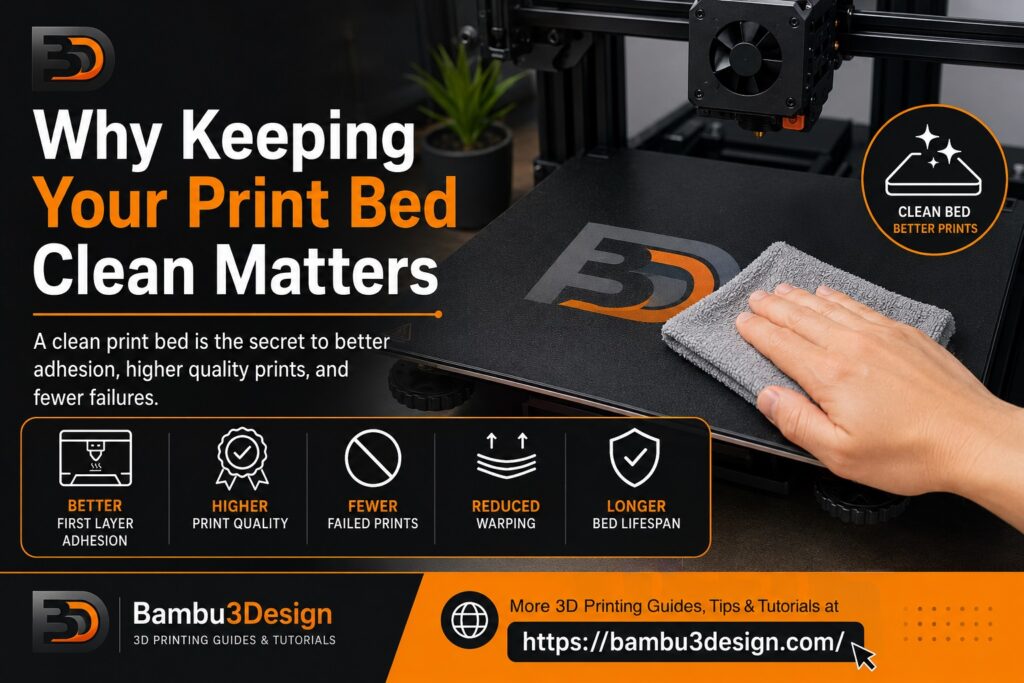
Why Keeping Your Print Bed Clean Matters
A clean print bed provides:
- Better first-layer adhesion
- Fewer failed prints
- Reduced warping
- More consistent print quality
- Longer build plate lifespan
- Easier model removal
Regular cleaning is one of the easiest maintenance tasks that can dramatically improve print success.
What Causes a Dirty Print Bed?
Several everyday factors reduce bed adhesion:
- Fingerprints and skin oils
- Dust and pet hair
- PLA, PETG, or TPU residue
- Glue stick buildup
- Adhesive spray residue
- Burned filament particles
If you frequently remove prints by touching the surface, you’re likely transferring natural skin oils that reduce grip.
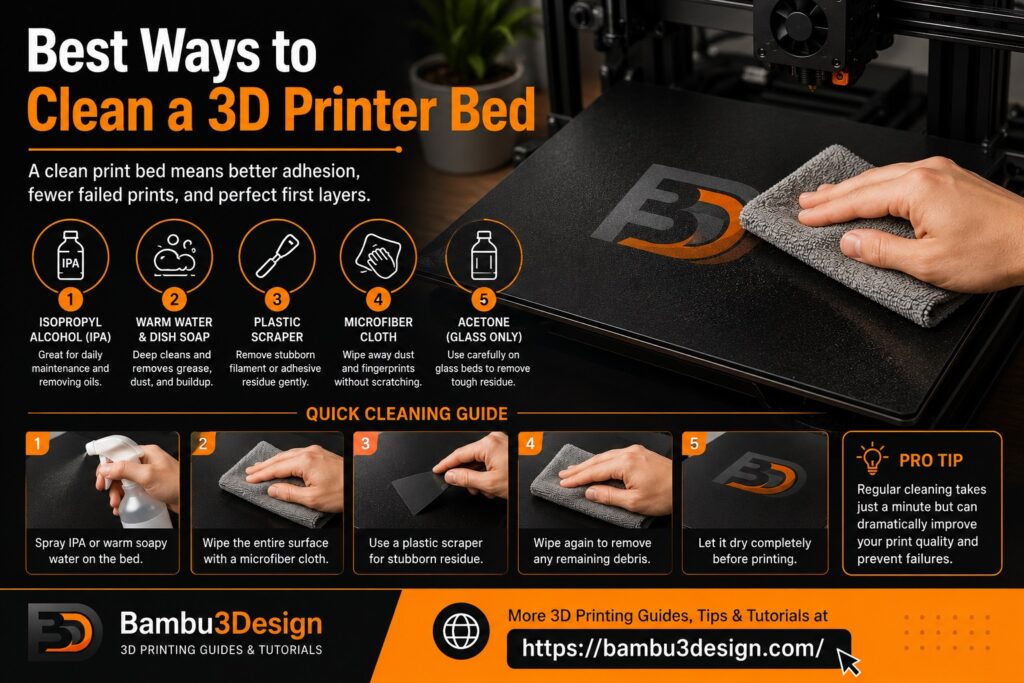
Best Ways to Clean a 3D Printer Bed
1. Isopropyl Alcohol (IPA)
Best for:
- PEI sheets
- Textured PEI
- Bambu Lab plates
- Spring steel plates
IPA is the easiest and safest cleaning method for everyday maintenance.
How to Use
- Wait until the bed cools.
- Apply 90–99% IPA to a microfiber cloth.
- Wipe the entire surface.
- Allow it to dry completely.
Pros
- Fast
- Leaves no residue
- Excellent for removing oils
- Safe for most modern print surfaces
Cons
- Doesn’t remove heavy glue buildup
2. Warm Water and Dish Soap
Best for:
- PEI
- Textured PEI
- Bambu Lab plates
This is often the most effective deep-cleaning method because dish soap removes oils better than alcohol.
Steps
- Remove the build plate.
- Wash with warm water.
- Add a few drops of grease-cutting dish soap.
- Gently scrub using a soft sponge.
- Rinse thoroughly.
- Dry completely before reinstalling.
3. Plastic Scraper
Sometimes filament residue remains stuck after removing a print.
A plastic scraper safely removes:
- PLA residue
- PETG leftovers
- Brim remnants
- Rafts
Avoid using excessive force.
4. Microfiber Cloth
A microfiber cloth helps remove:
- Dust
- Small debris
- Loose filament particles
Never use paper towels, which may scratch certain surfaces.
5. Acetone (Glass Beds Only)
Acetone can remove stubborn plastic residue on glass beds.
However:
Do NOT use acetone on:
- PEI sheets
- Powder-coated PEI
- Bambu Lab textured plates
- BuildTak surfaces
Acetone may permanently damage these materials.
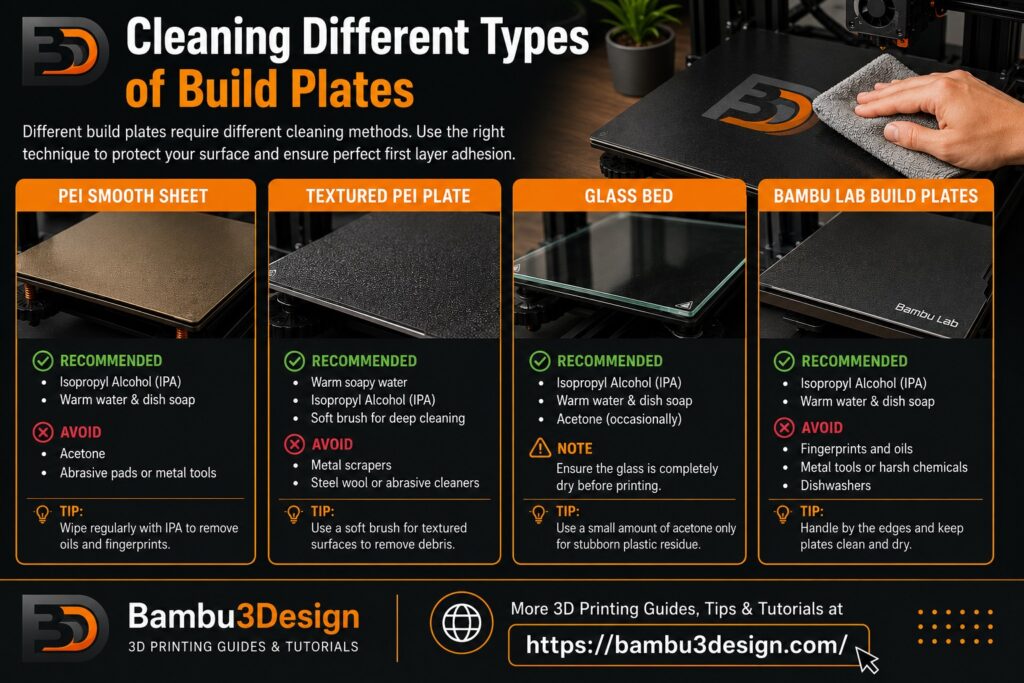
Cleaning Different Types of Build Plates
PEI Smooth Sheet
Recommended cleaners:
- IPA
- Warm water and dish soap
Avoid:
- Acetone
- Abrasive pads
Textured PEI Plate
Recommended:
- Warm soapy water
- IPA
- Soft brush for textured surfaces
Avoid:
- Metal scrapers
- Steel wool
Glass Bed
Recommended:
- IPA
- Dish soap
- Acetone (occasionally)
Bambu Lab Build Plates
Bambu Lab recommends avoiding fingerprints whenever possible.
For routine maintenance:
- 90–99% IPA
- Dish soap for deep cleaning
- Handle plates by the edges
Never scrape aggressively or use harsh chemicals.
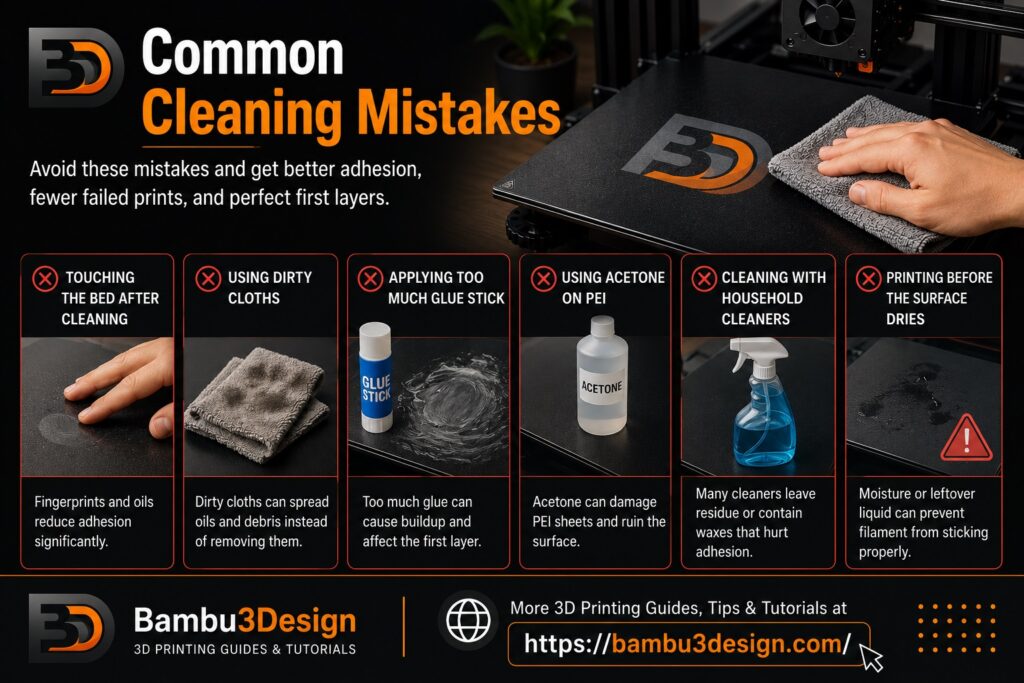
Common Cleaning Mistakes
Many users unknowingly reduce adhesion by making these mistakes:
- Touching the bed after cleaning
- Using dirty cloths
- Applying too much glue stick
- Using acetone on PEI
- Cleaning with household cleaners containing wax
- Printing immediately before the surface dries
How Often Should You Clean Your Print Bed?
Routine maintenance:
- IPA: every few prints
- Soap and water: every few weeks
- Deep cleaning: whenever adhesion noticeably decreases
If you print daily, quick IPA cleaning before each long print is a good habit.
Signs Your Bed Needs Cleaning
Your build plate probably needs attention if:
- First layer won’t stick
- Corners lift easily
- Models detach mid-print
- Adhesion varies across the bed
- Surface looks shiny from fingerprints
Extra Tips for Better Bed Adhesion
Cleaning alone isn’t always enough. For the best results:
- Level the bed correctly
- Set the proper Z-offset
- Dry your filament
- Use the correct bed temperature
- Keep the printer in a stable environment
These factors work together with a clean build surface to produce reliable first layers.
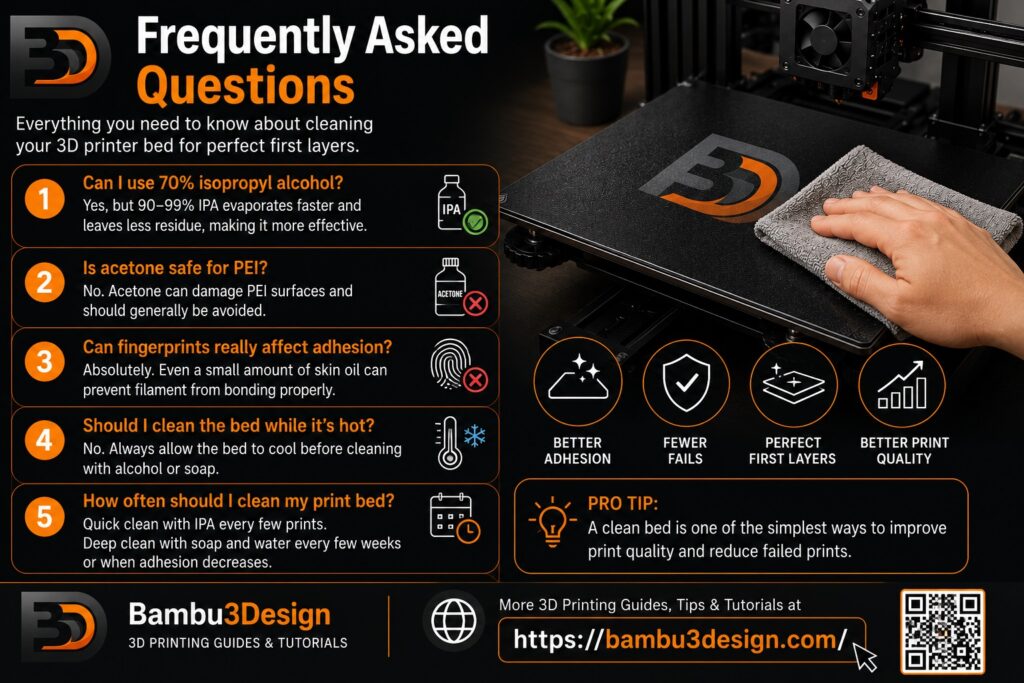
Frequently Asked Questions
Can I use 70% isopropyl alcohol?
Yes, but 90–99% IPA evaporates faster and leaves less residue.
Is acetone safe for PEI?
No. Acetone can damage PEI surfaces and should generally be avoided.
Can fingerprints really affect adhesion?
Absolutely. Even a small amount of skin oil can prevent filament from bonding properly.
Should I clean the bed while it’s hot?
No. Always allow the bed to cool before cleaning with alcohol or soap.
Final Thoughts
A clean print bed is one of the simplest ways to improve print quality. Whether you’re using a Bambu Lab printer, an Ender 3, a Prusa, or any other FDM machine, regular cleaning can dramatically reduce failed prints and improve first-layer consistency.
For most users, a combination of isopropyl alcohol for daily maintenance and warm soapy water for occasional deep cleaning provides the best balance between convenience and long-term performance.
With just a few minutes of maintenance, you’ll enjoy stronger adhesion, cleaner prints, and far fewer frustrating failures.