Professional 3D printing has evolved significantly over the past few years. Today’s machines offer much more than fast printing speeds—they combine advanced hardware, intelligent software, automation, remote management, and specialized materials to help businesses produce reliable, high-quality parts every day.
Unlike entry-level desktop printers, professional systems are designed for continuous operation, repeatable results, enterprise security, and engineering-grade materials. Whether you’re running a manufacturing workshop, product development lab, engineering department, university, or design studio, choosing the right professional 3D printer depends on your workflow, material requirements, and production goals.
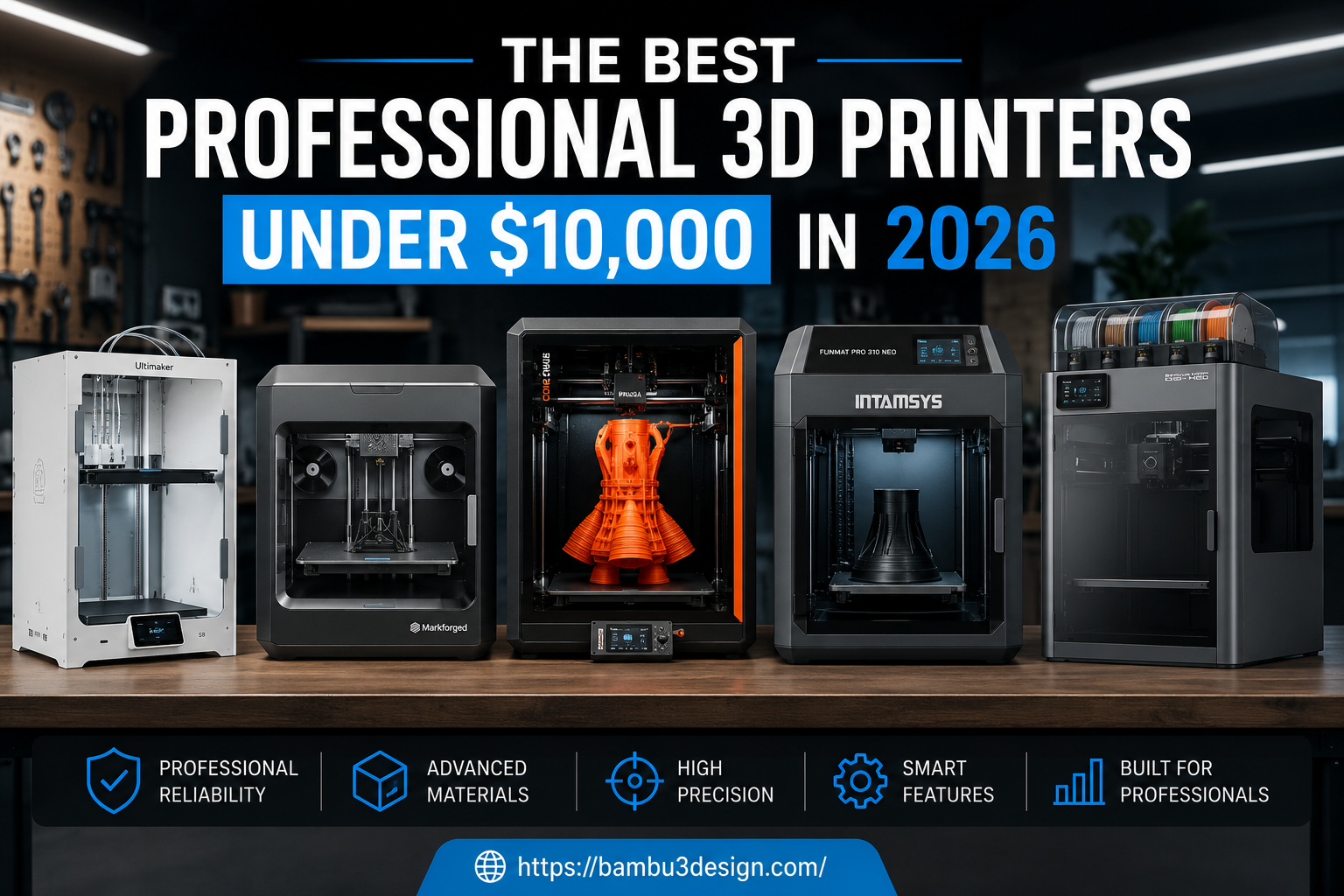
In this guide, we’ve selected some of the best professional 3D printers under $10,000 available in 2026. Rather than simply comparing specifications, we focus on what each printer does best and which type of business will benefit the most.
Consumer vs. Professional 3D Printers
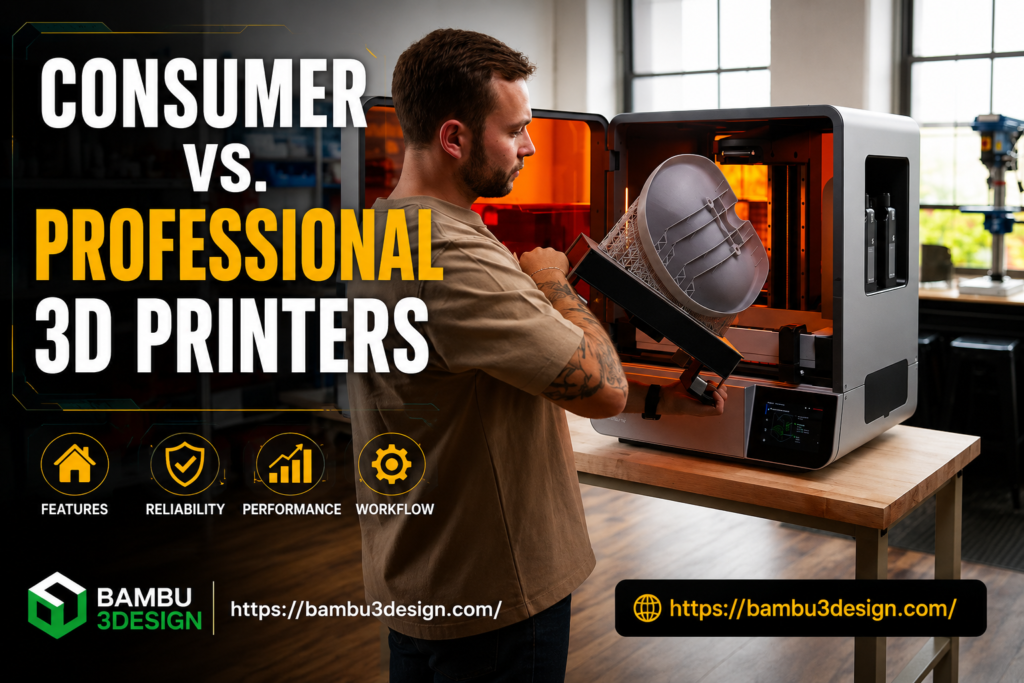
The gap between consumer and professional 3D printers has become much smaller in recent years. Many desktop printers now include automatic bed leveling, enclosed chambers, cameras, Wi-Fi connectivity, and multi-material printing.
However, professional printers distinguish themselves through:
- Higher reliability for continuous operation
- Better engineering material support
- Enterprise security features
- Fleet management capabilities
- Advanced software ecosystems
- Easier maintenance
- Better technical support
- Repeatable print quality across multiple users
For businesses, minimizing downtime is often more valuable than simply having the fastest printer.
What Makes a Professional 3D Printer?
Professional users often require features that go beyond basic printing:
- Engineering-grade materials
- Heated build chambers
- Large build volumes
- Dual-material or multi-material printing
- Enterprise networking
- Fleet management
- Offline printing capability
- Production-ready software
- Reliable technical support
These capabilities allow organizations to produce functional prototypes, manufacturing fixtures, tooling, production parts, and customer-ready products with greater confidence.
Best Professional 3D Printers Under $10,000
Bambu Lab H2D Pro
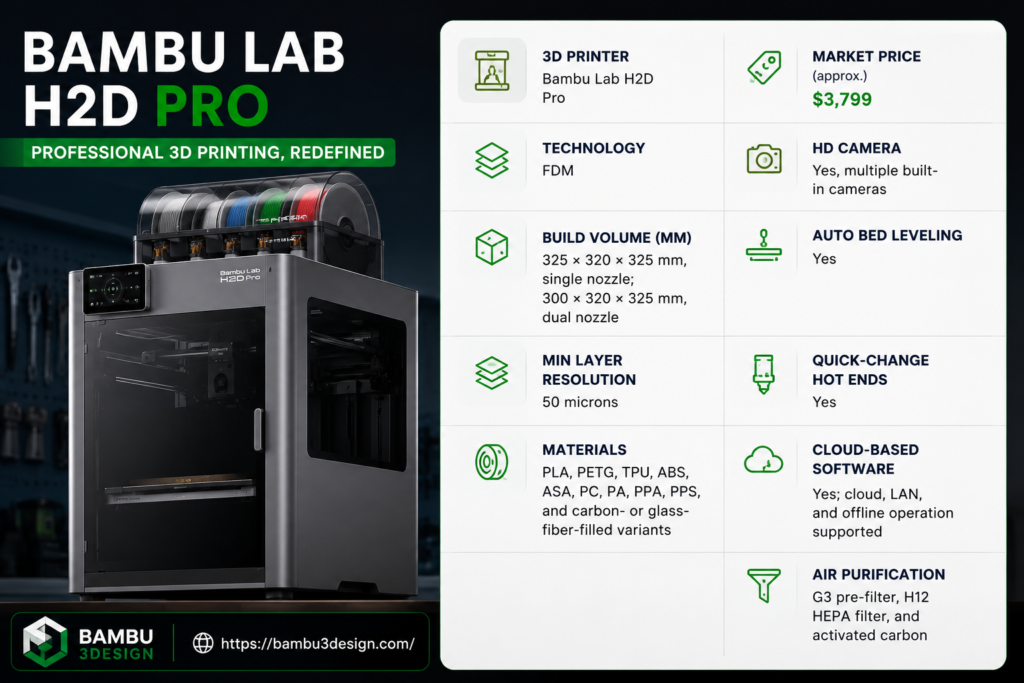
Best for Enterprise FDM Printing
The Bambu Lab H2D Pro combines high-speed printing with enterprise-grade networking, making it an excellent choice for engineering companies and manufacturing environments.
Key Features
- Dual-nozzle printing
- 350°C hotend
- Heated chamber
- AMS filament management
- Enterprise security
- Ethernet connectivity
- Offline operation
- Multiple built-in cameras
The H2D Pro is particularly attractive for organizations that require secure deployment while maintaining Bambu Lab’s fast and highly automated printing experience.
Prusa Core One L
Best for Engineering Teams
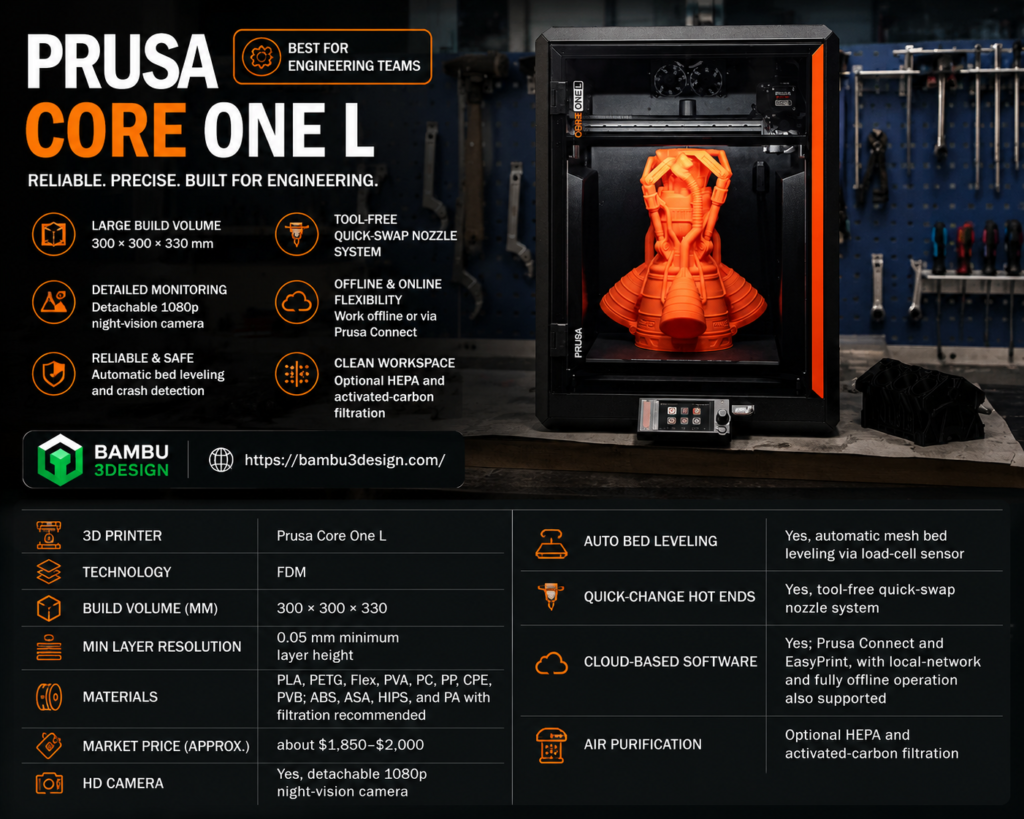
Prusa’s Core One L focuses on reliability, repairability, and engineering materials.
Highlights
- Heated chamber
- Large build volume
- Offline printing support
- Automatic bed leveling
- High-flow nozzle
- Future INDX tool-changing upgrade
Prusa’s open ecosystem and long-term upgrade philosophy make it especially attractive for organizations planning to use the printer for many years.
Intamsys Funmat Pro 310 Neo
Best for High-Temperature Engineering Materials
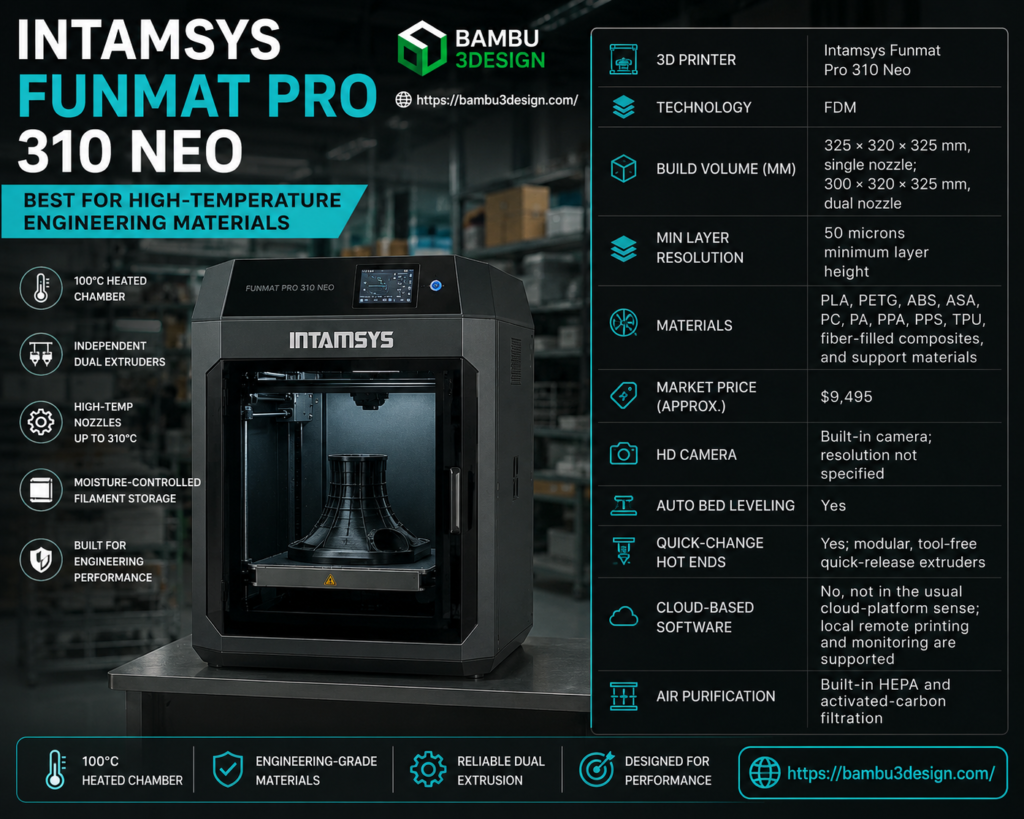
When engineering polymers become the priority, the Funmat Pro 310 Neo stands out.
Why Choose It?
- 100°C heated chamber
- 350°C nozzles
- Independent dual extruders
- HEPA filtration
- Moisture-controlled filament storage
It is designed for demanding materials including:
- Nylon
- Polycarbonate
- PPS
- PPA
- Carbon fiber composites
- Glass fiber composites
Formlabs Form 4L
Best Large-Format Professional Resin Printer
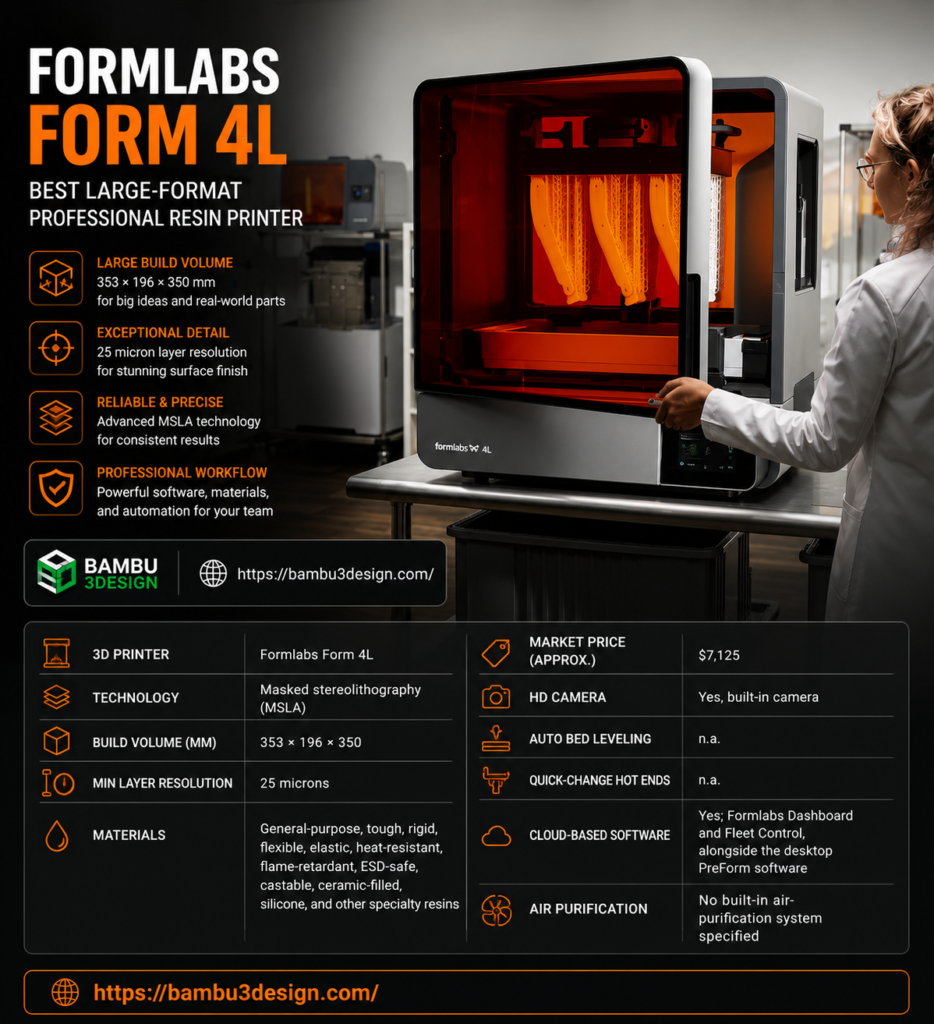
For businesses requiring exceptional detail and smooth surface finishes, the Form 4L is one of the strongest options available.
Features
- Large resin build volume
- Outstanding surface quality
- Broad resin ecosystem
- Automated resin handling
- Wash and cure workflow
- Fleet management software
Industries including healthcare, dentistry, jewelry, product design, and manufacturing can all benefit from its professional workflow.
UltiMaker S8
Best Dual-Material Professional Printer
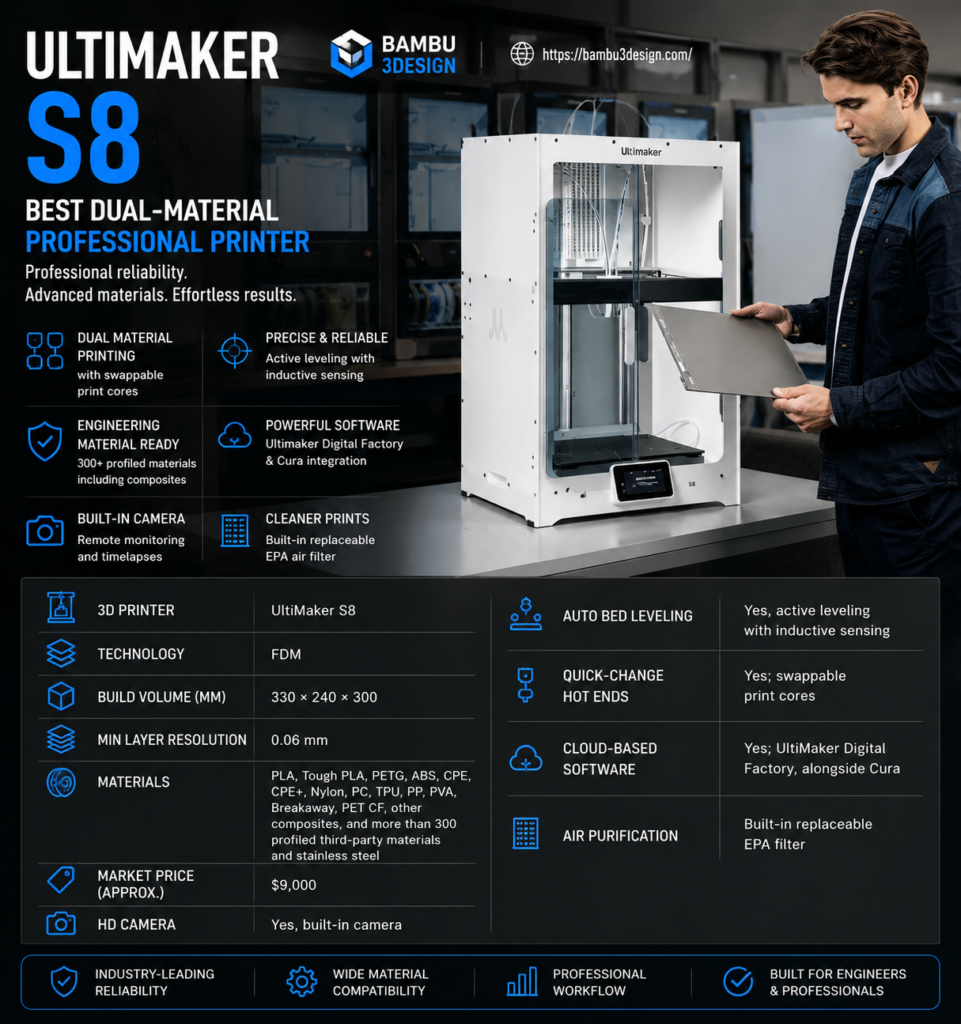
The UltiMaker S8 remains one of the most mature professional FDM ecosystems.
Advantages
- Dual-material printing
- Cura software ecosystem
- Digital Factory management
- Extensive validated material profiles
- Flexible build plate
- Built-in air filtration
It is ideal for companies that regularly print soluble supports and engineering materials.
Markforged Onyx Pro (Gen 2)
Best Composite 3D Printer
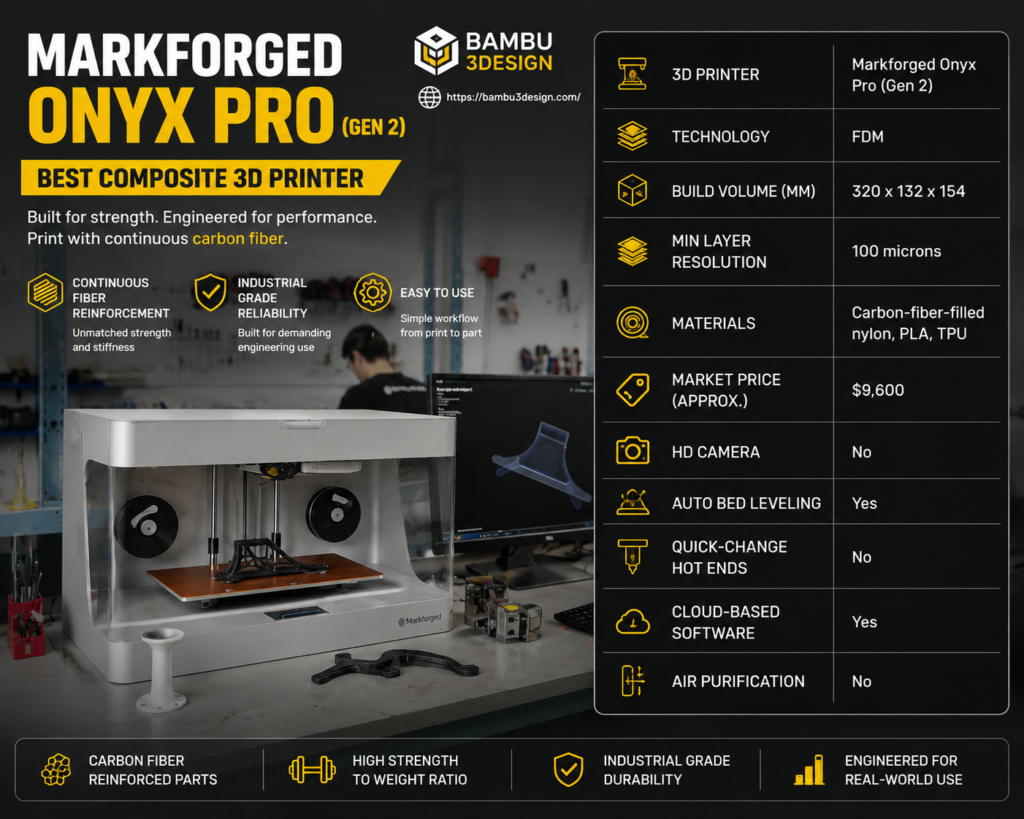
Unlike conventional FDM printers, the Markforged Onyx Pro reinforces printed parts with continuous fiberglass.
Key Benefits
- Carbon-fiber-filled nylon
- Continuous fiberglass reinforcement
- Strong lightweight tooling
- Engineering fixtures
- Functional manufacturing parts
For businesses producing jigs, fixtures, brackets, and production tooling, continuous fiber reinforcement can significantly improve part performance.
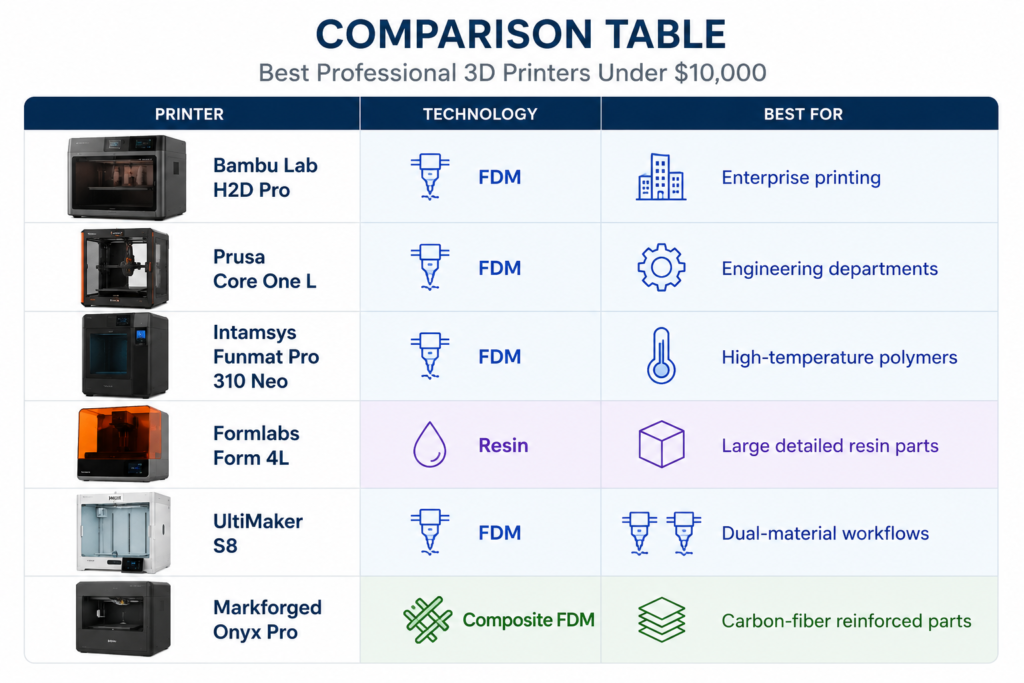
Which Professional 3D Printer Should You Buy?
The right choice depends entirely on your application.
Choose:
- Bambu Lab H2D Pro for enterprise automation and secure networking.
- Prusa Core One L for reliability and repairability.
- Intamsys Funmat Pro 310 Neo for engineering plastics.
- Formlabs Form 4L for large, highly detailed resin parts.
- UltiMaker S8 for dependable dual-material workflows.
- Markforged Onyx Pro for reinforced composite components.
No single printer is the best in every category, but each excels within its intended professional environment.
Final Thoughts
Professional 3D printing is no longer reserved for large industrial companies. Today, businesses of all sizes can access highly capable machines that offer enterprise-level reliability, advanced automation, and excellent print quality—all for under $10,000.
When evaluating a professional printer, don’t focus solely on speed or specifications. Consider the complete workflow, including software, material ecosystem, maintenance requirements, network security, technical support, and long-term operating costs.
Investing in the right professional 3D printer can improve productivity, reduce manufacturing lead times, and enable the production of stronger, more accurate, and more consistent parts.
Whether you’re creating engineering prototypes, manufacturing fixtures, production tooling, medical models, or functional end-use components, the printers in this guide represent some of the best professional 3D printing solutions available in 2026