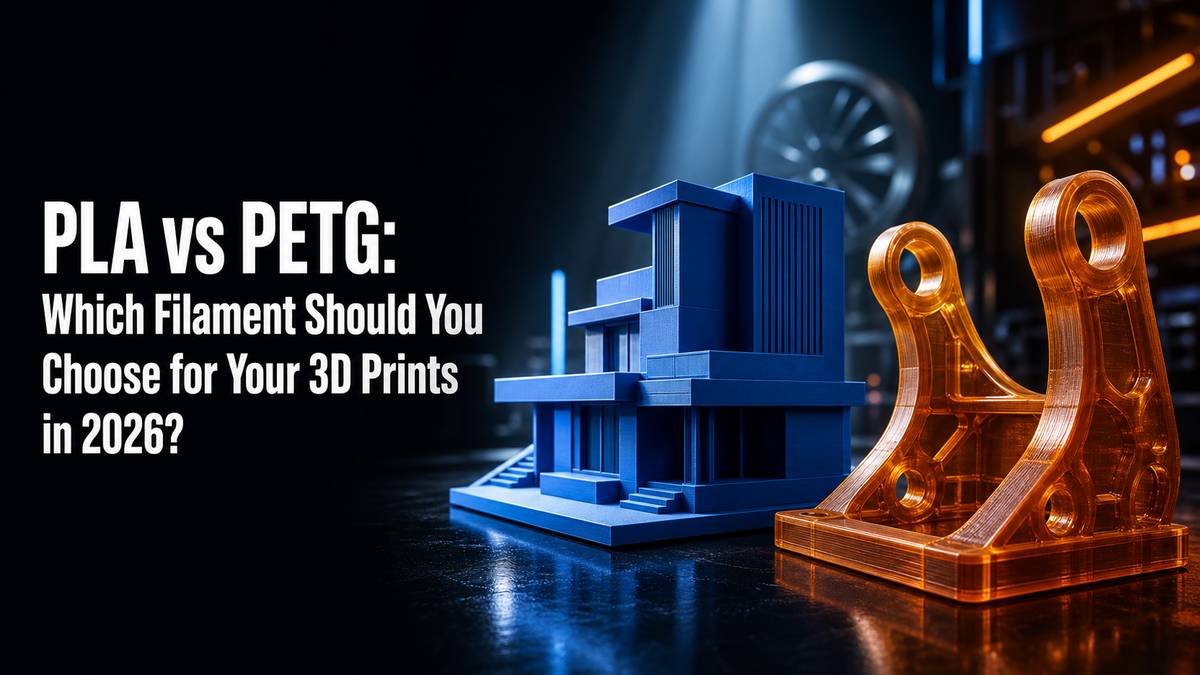
So, you’ve jumped into the exciting world of 3D printing, perhaps with a fantastic Bambu Lab printer or another great machine, and now you’re faced with a common question: PLA vs PETG – which one should I use? Don’t worry, you’re not alone! These two filaments are arguably the most popular choices for hobbyists and professionals alike, and for good reason.
While the year 2026 might sound futuristic, the core properties and printing characteristics of PLA and PETG remain fundamental. This guide will help you understand the key differences, pros, cons, and ideal applications for each, empowering you to pick the perfect material for your next 3D printing adventure.
What is PLA? Your First Friend in 3D Printing
PLA, or Polylactic Acid, is often the first filament new 3D printer users encounter, and for good reason. It’s derived from renewable resources like corn starch or sugarcane, making it more environmentally friendly than many other plastics (though its biodegradability requires specific industrial composting conditions).
Pros of PLA
- Easy to Print: This is PLA’s biggest selling point. It prints at lower temperatures, has minimal warping, and generally sticks well to the print bed without much fuss. If you’re new to 3D printing, PLA is incredibly forgiving.
- Low Odor: Unlike some other filaments, PLA produces very little odor during printing, making it suitable for printing in shared living spaces.
- Wide Color Range & Finish: PLA comes in an astounding array of colors, opacities, and finishes (matte, glossy, silk, glitter). This makes it perfect for aesthetic prints.
- Good for Details: PLA tends to hold fine details very well, resulting in crisp prints.
Cons of PLA
- Brittle: Finished PLA prints can be quite brittle and prone to snapping under stress or if dropped.
- Low Heat Resistance: PLA softens and deforms at relatively low temperatures (around 50-60°C or 122-140°F). Don’t leave PLA prints in a hot car!
- UV Degradation: Prolonged exposure to sunlight can weaken and damage PLA prints over time.
Best Uses for PLA
- Decorative items: Vases, figurines, cosplay props, desk organizers.
- Prototypes: Quick, low-cost iterations of designs.
- Toys: Especially those that won’t see rough play or high temperatures.
- Low-stress parts: Non-functional parts that don’t need significant strength or durability.
Tips for Printing with PLA
- Temperatures: Hotend: 190-220°C, Bed: 50-60°C.
- Cooling: Use plenty of part cooling for best results, especially for overhangs and bridges.
- Storage: Keep PLA dry! While less hygroscopic than PETG, moisture can still degrade print quality.
What is PETG? The Stronger, More Flexible Alternative
PETG, or Polyethylene Terephthalate Glycol-modified, is a fantastic material that bridges the gap between the ease of PLA and the strength of more advanced filaments like ABS. It’s essentially a modified version of the plastic used in water bottles (PET), with glycol added to make it easier to 3D print and less brittle.
Pros of PETG
- Strength & Durability: PETG is significantly stronger, more flexible, and less brittle than PLA. It offers good impact resistance.
- Layer Adhesion: It generally boasts excellent layer adhesion, leading to strong, durable parts.
- Moderate Heat Resistance: With a glass transition temperature around 80-85°C (176-185°F), PETG can withstand higher temperatures than PLA, making it suitable for more demanding applications.
- Chemical Resistance: PETG is more resistant to various chemicals compared to PLA.
- Food Safety (with caveats): While the material itself can be food-safe, the FDM 3D printing process creates microscopic pores where bacteria can hide. Always check the filament manufacturer’s specific claims and consider post-processing like resin coating for true food-safe applications.
Cons of PETG
- Stringing & Oozing: PETG is notorious for stringing and oozing, which can require careful calibration of retraction settings in your slicer.
- More Difficult to Print: While not as challenging as ABS, PETG requires higher printing temperatures and can be more finicky with bed adhesion and cooling settings than PLA.
- Hygroscopic: PETG readily absorbs moisture from the air, which can lead to bubbles, poor layer adhesion, and weaker prints. Proper storage (dry box) is essential.
- Sticky Surface: Prints can have a slightly sticky or gummy surface, making supports harder to remove and the surface prone to scratching.
Best Uses for PETG
- Functional Parts: Brackets, enclosures, tools, printer parts.
- Mechanical Components: Gears (for light loads), structural elements.
- Outdoor Use: Parts that need to withstand sunlight and moderate heat.
- Water-resistant items: Vases, containers (again, consider post-processing for true waterproofing).
- Items needing some flexibility: Parts that need to bend slightly without breaking.
Tips for Printing with PETG
- Temperatures: Hotend: 220-250°C, Bed: 70-85°C (use an adhesive like glue stick or textured PEI for better release).
- Retraction: Experiment with retraction distance and speed to minimize stringing. This is key for successful PETG prints.
- Cooling: Less cooling than PLA is often better for PETG to promote stronger layer adhesion, but some cooling (20-50%) can help with overhangs.
- Drying: Always dry your PETG filament before printing, especially if it’s been exposed to humidity.
PLA vs. PETG: A Side-by-Side Comparison
Let’s put them head-to-head for a clearer picture.
| Feature | PLA | PETG |
| :—————— | :————————————– | :—————————————– |
| Ease of Printing| Very Easy | Moderate (prone to stringing) |
| Strength | Low (brittle) | High (durable, impact-resistant) |
| Flexibility | Rigid, breaks easily | Moderate, some flexibility without breaking|
| Heat Resistance | Low (deforms ~50-60°C) | Moderate (deforms ~80-85°C) |
| UV Resistance | Low | Good |
| Post-Processing | Easy to sand, paint, glue | Harder to sand, sticky surface |
| Odor during Print| Very Low | Low to Moderate |
| Warping | Minimal | Low (more than PLA, less than ABS) |
| Hygroscopy | Low | High (requires drying) |
| Typical Uses | Decorative, prototypes, toys | Functional parts, outdoor items, mechanical|
When to Choose PLA (and When Not To)
Choose PLA when:
- You’re a beginner and want an easy, forgiving material.
- Your print is primarily for aesthetic purposes (e.g., figurines, display models, cosplay).
- The printed object won’t be exposed to high temperatures or direct sunlight.
- You need fine details and a smooth finish.
- You’re making quick prototypes or non-functional parts.
- You prefer a wider range of colors and special finishes.
Avoid PLA if:
- The part needs to be strong, durable, or withstand impact.
- The object will be outdoors or in a hot environment (e.g., car dashboard).
- You need flexibility or resistance to snapping.
When to Choose PETG (and When Not To)
Choose PETG when:
- You need a strong, durable, and impact-resistant part.
- The object will be exposed to moderate heat or UV light (e.g., outdoor sensor casing).
- You need some flexibility without the print breaking.
- You’re printing functional parts like brackets, hooks, or printer modifications.
- You want better chemical resistance than PLA.
Avoid PETG if:
- You’re an absolute beginner struggling with basic settings (start with PLA first).
- Stringing and oozing are deal-breakers for your print’s aesthetic.
- You require extremely high-temperature resistance (look at ASA or ABS).
- You don’t have good filament storage to keep it dry.
Key Considerations Beyond Filament Type
No matter which filament you choose, success in 3D printing also depends on other factors:
1. Your 3D Printer Setup
Modern printers like the Bambu Lab X1C or P1S handle both PLA and PETG with ease, often having optimized profiles in Bambu Studio or OrcaSlicer. Older or less capable printers might struggle more with PETG’s higher temperature requirements.
2. Slicer Settings
- Temperature: Hotend and bed temperatures are critical. Always check the filament manufacturer’s recommendations.
- Retraction: Absolutely vital for PETG to combat stringing. Experiment with distance and speed.
- Cooling: PLA generally loves cooling; PETG often performs better with less cooling, especially for layer adhesion.
- Print Speed: Starting with slightly lower speeds can help when troubleshooting a new filament.
3. Bed Adhesion
Both filaments benefit from a clean print surface. For PLA, textured PEI or a gluestick on smooth PEI often works wonders. For PETG, glue stick on glass or smooth PEI is highly recommended to prevent the filament from sticking too well and damaging your print surface upon removal. Textured PEI is also a popular choice for PETG.
Conclusion
Ultimately, the choice between PLA and PETG comes down to your project’s specific needs. Think about what the object will be used for, where it will be kept, and what characteristics are most important.
- For beginners and aesthetic prints: Start with PLA. It’s forgiving, easy to print, and offers beautiful results.
- For functional parts needing strength and durability: Step up to PETG. It provides excellent performance, though it requires a bit more calibration.
Many makers keep both on hand, using PLA for quick prototypes and decorative items, and PETG for functional parts. By understanding their distinct properties, you’re well-equipped to make the best filament choice for your 3D printing success in 2026 and beyond!