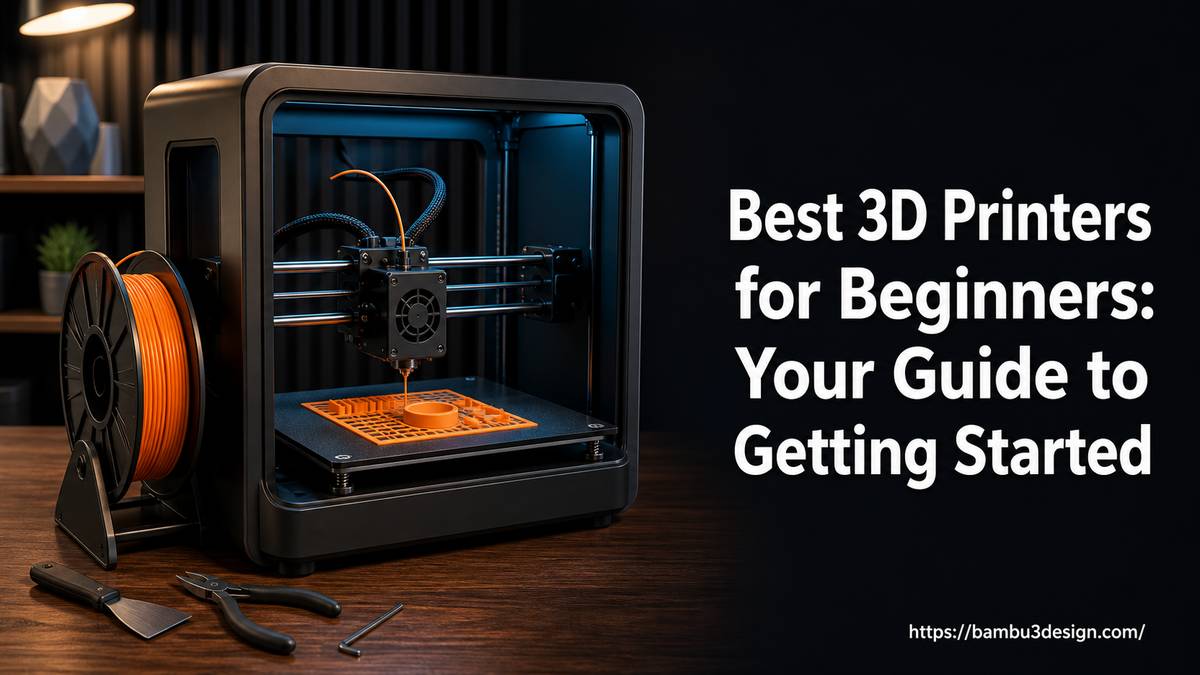
Embarking on the world of 3D printing is an exciting prospect, but the sheer variety of machines, technologies, and features can be daunting for newcomers. Choosing the best 3D printers for beginners means balancing ease of use with capabilities that will foster learning and creativity. In today’s market, features once considered premium – such as CoreXY motion systems, active chamber heating, AI failure detection, and multi-filament printing – are becoming standard even on more accessible machines.
This guide will help demystify the process, explaining fundamental concepts, highlighting key features to look for, and recommending printer types suitable for those taking their first steps in additive manufacturing.
What is 3D Printing? Understanding the Core Concept
At its heart, 3D printing, also known as additive manufacturing, is a process of creating a three-dimensional object from a digital file. Unlike traditional subtractive manufacturing (which carves material away) or formative manufacturing (which uses molds), 3D printing builds an object layer by thin layer. This additive approach means material is placed only where needed, resulting in complex geometries that might be impossible or impractical with other methods.
Key characteristics of 3D printing include:
- Additive Process: Material is added layer by layer, not removed from a block.
- Digital Foundation: Every print begins with a 3D model, which is then ‘sliced’ into individual layers by software.
- Versatile Materials: While often associated with plastics, 3D printing encompasses a wide range of materials, including resins, metals, ceramics, and more.
- Broad Application: From personal projects at home to industrial production of certified aerospace parts, the underlying principle remains the same.
Key Features to Look for in a Beginner 3D Printer
For a beginner, the ideal 3D printer should offer a balance of user-friendliness, reliability, and sufficient capabilities to explore various projects without excessive complexity. Here are some essential features to consider:
- Ease of Setup and Operation: A printer that requires minimal assembly and calibration out of the box reduces initial frustration. Look for systems with guided setup processes or comprehensive beginner courses, like the Prusa Academy’s XL Beginners Course.
- Reliable Extrusion System: Consistent material feeding and melting are crucial for successful prints. High-quality hotends and extruders minimize common issues like clogging.
- User-Friendly Slicer Software: The slicer converts your 3D model into instructions for the printer. Software like PrusaSlicer, Bambu Studio, or Cura offers intuitive interfaces and pre-configured profiles for various filaments and printers, simplifying the initial learning curve.
- Good Bed Adhesion: A heated print bed and effective build surfaces (e.g., textured PEI sheets) are vital for ensuring prints stick properly during printing and detach easily afterward.
- Safety Features: Enclosures can reduce noise, manage odors, and maintain stable temperatures, which is especially important for materials like ABS or ASA. Features like automatic shut-off or filament run-out detection enhance safety and convenience.
- Community and Support: Access to a strong online community, readily available tutorials, and responsive customer support can be invaluable when troubleshooting or seeking advice.
Top 3D Printer Recommendations for Beginners
The market offers diverse options, but here are some categories and examples of best 3D printers for beginners that balance performance with an approachable learning experience.
1. Entry-Level FDM: Value and Accessibility
Fused Deposition Modeling (FDM) printers are the most common type for beginners, offering a great balance of cost, material variety, and ease of use. They are ideal for functional parts, prototypes, and larger models.
- Bambu Lab P1S Combo: Often highlighted for its value, the Bambu Lab P1S Combo offers impressive speed and reliability. When bundled with the Automatic Material System (AMS), it provides multi-color and multi-material capabilities, typically at a price point that makes advanced features accessible. Its ‘new-gen’ design with features like CoreXY motion systems and advanced control makes it a strong contender for a first printer.
2. Mid-Range FDM: Balancing Performance and Features
Stepping up from entry-level, mid-range FDM printers often integrate more advanced features that enhance print quality, speed, and material compatibility.
- Bambu Lab P2S: Positioned as a strong contender in the mid-range FDM category, printers like the Bambu Lab P2S exemplify the evolution of desktop 3D printing. They often include features like active chamber heating and AI failure detection, which contribute to higher success rates and better prints with engineering-grade filaments.
3. Multi-Material FDM: Expanding Creative Possibilities
For beginners who quickly want to explore more complex projects involving multiple colors or material types within a single print, multi-material FDM systems are an excellent choice.
- Original Prusa XL: Available in 2-toolhead and 5-toolhead configurations, the Prusa XL excels at multi-material printing. It supports a wide range of filaments like PLA, PETG, and PCCF (carbon fiber reinforced PC), delivering high-quality, often zero-waste, multi-material prints. While a more significant investment, its advanced capabilities and the availability of dedicated beginner courses make it a powerful tool for aspiring makers.
4. Resin 3D Printers: Precision for Detailed Models
For those focused on highly detailed models, miniatures, or intricate prototypes, resin (SLA/DLP) 3D printers offer unparalleled resolution.
- Elegoo Saturn 4 Ultra 16K: As a representative of modern resin printers, models like the Saturn 4 Ultra 16K provide exceptional detail. While resin printing involves more post-processing (washing and curing) and requires careful handling of liquid resins, the results for intricate models are superior to FDM. Beginners interested in producing highly aesthetic or miniature objects will find this technology rewarding.
Essential Considerations Before Buying Your First 3D Printer
Choosing your first 3D printer goes beyond just picking a model. Here are crucial factors to weigh:
- Budget: 3D printer prices range widely. While sales (like Bambu Lab’s anniversary or Prusa’s summer deals) can offer significant discounts, it’s wise to consider that some sale prices might become permanent for older models. Remember to factor in the cost of filament/resin and any necessary accessories.
- Filament & Material Compatibility: Consider the types of materials you want to print. PLA is great for beginners, but PETG, ABS, ASA, TPU, Nylon, and carbon-fiber filled filaments offer different mechanical properties. Ensure your chosen printer can handle your desired materials.
- Build Volume: The size of objects you plan to print dictates the necessary build volume. Larger prints require larger print beds.
- Assembly vs. Pre-Assembled: Some printers come as kits, requiring assembly, which can be a valuable learning experience. Others are pre-assembled, offering a quicker start. For most beginners, a pre-assembled or semi-assembled unit often provides a smoother introduction.
- Software Ecosystem: Familiarize yourself with the slicing software that comes with or is recommended for your printer. Good software with pre-set profiles simplifies print preparation.
- Maintenance: All 3D printers require some level of maintenance. Understand the basic upkeep involved to keep your machine running optimally, such as cleaning the nozzle, bed, and regularly checking belts.
Maximizing Your Beginner 3D Printing Experience
Once you’ve chosen your printer, here’s how to make the most of your journey:
- Start Simple: Begin with small, uncomplicated prints. Your first successful print will be a huge confidence booster.
- Utilize Learning Resources: Take advantage of online courses (like Prusa Academy), community forums, and YouTube tutorials. These resources can accelerate your learning curve significantly.
- Understand Slicer Settings: While pre-set profiles are great for starting, learning about infill, layer height, and print speed will give you greater control over your prints.
- Practice Regular Maintenance: A well-maintained printer performs better and lasts longer. Refer to your printer’s manual for recommended maintenance schedules.
- Experiment with Materials: Once comfortable with PLA, try other filaments like PETG for stronger parts or TPU for flexible objects. Each material offers unique characteristics and challenges.
Conclusion
Choosing the best 3D printers for beginners is about finding a machine that aligns with your learning style, budget, and project aspirations. Whether you opt for an accessible FDM printer like the Bambu Lab P1S, a versatile multi-material system like the Prusa XL, or a high-detail resin printer, the key is to embrace the learning process. The 3D printing landscape is continuously evolving, with advanced features becoming more common and affordable. By focusing on ease of use, reliable performance, and strong community support, you’ll be well-equipped to dive into the exciting world of additive manufacturing and bring your digital designs to life.