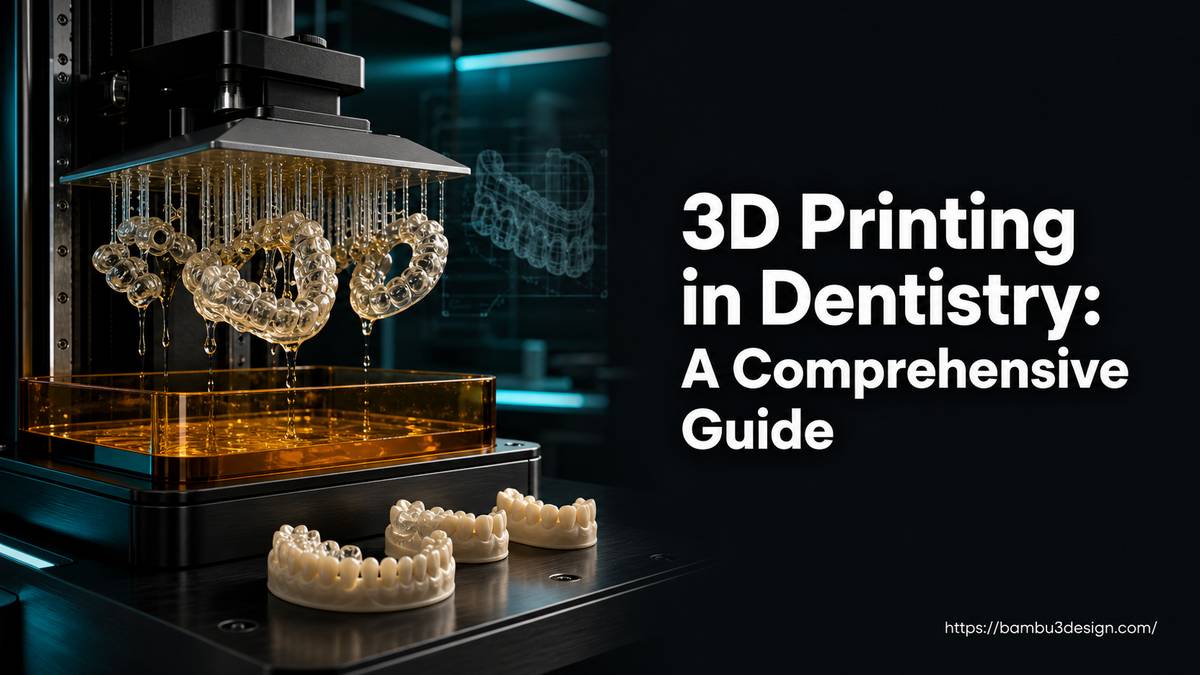
The dental industry is undergoing a significant transformation, with 3D printing emerging as a pivotal technology for enhancing patient care and streamlining clinical workflows. This additive manufacturing approach allows dental professionals to create precise, customized dental appliances, prosthetics, and models directly from digital designs, layer by layer.
Unlike traditional subtractive methods, 3D printing offers unparalleled precision, customization, and efficiency. Its adoption has accelerated rapidly, driven by advancements in technology and materials, making it an indispensable tool for orthodontists, dentists, and lab technicians. Understanding the core technologies, specialized materials, and diverse applications is key to leveraging the full potential of 3D printing in modern dentistry.
The Digital Dental Workflow with 3D Printing
Integrating 3D printing into dental practice typically involves a seamless digital workflow, replacing many traditional analog steps. This process connects initial patient data acquisition to the final fabrication of a dental appliance.
Here are the key steps in a digital dental workflow utilizing 3D printing:
-
Digital Scanning (Data Acquisition): The process begins with capturing a precise digital model of the patient’s oral anatomy. This is typically achieved using an intraoral scanner, which creates a 3D image of teeth and gums, replacing traditional, often uncomfortable, physical impressions. For physical impressions, a desktop scanner can be used. This digital impression is highly accurate and immediately available for the subsequent design phase.
-
CAD Design (Modeling): The scanned data is imported into specialized Computer-Aided Design (CAD) software. Dental professionals or lab technicians then digitally sculpt the required restoration or appliance—whether it’s a crown, bridge, denture, aligner, or surgical guide. CAD software allows for precise adjustments to occlusion, contacts, and aesthetics, ensuring an optimal fit and function for the patient.
-
3D Printing (Fabrication): Once the design is finalized, it is sent to a 3D printer for manufacturing. The printer builds the object layer by layer from a chosen material, typically a biocompatible resin. This digital fabrication method is not only quick but also highly precise, reproducing intricate details that are crucial for the fit and function of the dental piece.
-
Post-Processing: After printing, the item undergoes finishing steps. For resin prints, this usually involves washing off excess uncured resin and then post-curing (hardening) the part under UV light to achieve its full mechanical properties and biocompatibility. The dental professional may then polish the item or add any necessary custom touches before it is ready for delivery or use in patient treatment.
This digitally driven process enhances accuracy at every stage, often compressing what previously required multiple appointments into fewer visits, benefiting both practitioners and patients.
Key 3D Printing Technologies in Dentistry
Three primary additive manufacturing technologies dominate the dental 3D printing landscape, each offering distinct advantages:
- Digital Light Processing (DLP): Considered a gold standard for many dental applications, DLP printers use a digital light projector to flash an entire layer of an object at once, curing liquid resin rapidly. This technology is known for its speed, accuracy, and efficiency, making it ideal for high-volume production of precise dental components.
- Stereolithography (SLA): SLA printers use a UV laser to draw each layer, selectively curing liquid resin point by point. While often slower than DLP for full layer curing, SLA offers exceptional resolution and surface finish, crucial for intricate dental geometries and highly detailed models.
- Liquid Crystal Display (LCD): Similar to DLP, LCD printers use an LCD screen as a light source to cure entire layers of resin. They often provide a cost-effective entry point into resin 3D printing while still delivering good resolution, suitable for a range of dental models and some appliances.
These resin-based technologies are favored in dentistry due to their ability to achieve the fine details and smooth surfaces required for patient-specific devices and models.
Essential 3D Printing Materials for Dental Applications
The evolution of specialized 3D printing materials has been critical to the widespread adoption of additive manufacturing in dentistry. These materials are formulated to meet stringent requirements for biocompatibility, mechanical properties, and aesthetics.
Key categories of dental 3D printing materials include:
- Photopolymer Resins: These are the most common materials, cured by light. They encompass a broad range of properties tailored for specific dental applications.
- Model Resins: Used for creating highly accurate diagnostic, orthodontic, and restorative models. They typically offer excellent dimensional stability and detail.
- Surgical Guide Resins: Biocompatible and often translucent, these resins are used for printing precise guides that assist during implant surgeries, ensuring accurate drilling angles and depths.
- Orthodontic Resins: Employed for manufacturing clear aligner models, retainers, and indirect bonding trays. These require good rigidity and smoothness.
- Temporary Crown and Bridge Resins: Biocompatible resins designed for direct printing of temporary restorations, offering good aesthetics and strength for interim use.
- Denture Base and Tooth Resins: Used for creating full or partial denture bases and individual denture teeth, providing aesthetic match and mechanical durability.
- Night Guard Resins: Flexible yet durable resins for printing custom occlusal splints or night guards that protect teeth from grinding and clenching.
- Nano-ceramic Resins: These hybrid materials combine resin with ceramic nanoparticles, offering enhanced strength, wear resistance, and aesthetic qualities suitable for permanent restorations, similar to traditional ceramic materials but processed additively.
- Flexible Resins: Designed for applications requiring a degree of elasticity, such as gingiva masks for implant visualization or custom impression trays.
- Bioactive Materials: Emerging materials that can interact with biological tissues, promoting healing or integration, although their widespread dental 3D printing application is still in development.
- Thermoplastic Options: While FDM technology (using thermoplastics) is less common for direct intraoral devices due to layer lines and surface finish, it can be used for some indirect applications or for printing prototypes and non-biocompatible models.
Material selection is paramount, as it directly impacts the success, safety, and longevity of the 3D-printed dental device.
Common Dental Applications of 3D Printing
3D printing has revolutionized numerous aspects of dental care, offering faster and more customized solutions across various specialties:
- Surgical Guides: Precisely printed guides assist dentists during implant placement, endodontic procedures, and orthognathic surgery, ensuring accuracy and minimizing invasiveness.
- Orthodontic Appliances: Fabrication of highly accurate models for clear aligners, retainers, and other custom orthodontic devices, allowing for precise treatment planning and faster production.
- Dental Models: Creation of diagnostic study models, restorative models with removable dies, and aligner models. These models are essential for treatment planning, patient education, and fabricating other dental prostheses.
- Prosthodontics: Direct printing of temporary crowns and bridges, full or partial denture bases, and individual denture teeth. Advanced materials even allow for permanent restorations and implant-supported prostheses.
- Night Guards and Occlusal Splints: Custom-fitted protective devices for patients suffering from bruxism or temporomandibular joint (TMJ) disorders.
- Indirect Bonding Trays: Used in orthodontics to accurately transfer brackets to a patient’s teeth simultaneously, significantly reducing chair time.
- Aesthetic Wax-Ups and Provisionals: Creating realistic models for aesthetic planning and temporary restorations that give patients a preview of their final smile.
Advantages of 3D Printing in Dentistry
The integration of 3D printing into dental workflows offers a multitude of benefits for both practitioners and patients:
- Unmatched Precision and Accuracy: Digital workflows and additive manufacturing eliminate many sources of error present in traditional methods, leading to restorations and appliances with superior fit.
- High Customization: Every printed object is patient-specific, designed to perfectly match individual anatomical details, enhancing comfort and function.
- Improved Efficiency and Speed: The ability to rapidly produce items on-demand, sometimes within hours, significantly reduces turnaround times for labs and clinics, allowing for same-day treatments.
- Enhanced Patient Experience: Faster treatment times, fewer appointments, and elimination of uncomfortable traditional impressions contribute to greater patient satisfaction.
- Cost-Effectiveness and Reduced Waste: Optimizing material usage through additive processes can lead to less material waste compared to subtractive milling. In-house production can also reduce outsourcing costs.
- Complex Geometries: 3D printing excels at creating intricate internal structures and complex geometries that would be difficult or impossible with traditional manufacturing or even milling.
Challenges and Considerations for Adoption
While the benefits are substantial, dental professionals considering 3D printing should be aware of certain aspects:
- Initial Investment: While more accessible than before, setting up a comprehensive 3D printing workflow (printer, post-processing units, software, materials) still requires an initial investment.
- Material Selection and Validation: Choosing the correct biocompatible and mechanically suitable resin for each application is critical and requires thorough understanding and validation.
- Post-Processing Requirements: Proper washing and post-curing are essential steps to ensure the mechanical integrity, biocompatibility, and longevity of resin-based dental prints.
- Training and Expertise: Mastering the digital workflow, from scanning and CAD design to printer operation and post-processing, requires training and a commitment to continuous learning.
Conclusion
3D printing in dentistry represents a transformative leap forward, moving beyond traditional limitations to deliver precise, customized, and efficient solutions. From enhancing diagnostic capabilities with accurate models to revolutionizing restorative and orthodontic treatments with patient-specific appliances and surgical guides, the technology continues to redefine dental care.
For dental professionals, embracing 3D printing means unlocking new levels of precision, improving workflow efficiency, and ultimately, elevating the patient experience. As material science and printer technologies continue to advance, the scope of 3D printing in dentistry will undoubtedly expand, making it an increasingly integral component of modern, high-quality oral healthcare.