Additive Manufacturing Explained: How 3D Printing Works
3D printing has transformed from a niche hobby into a powerful industrial process, enabling rapid prototyping, custom part creation, and complex geometries previously impossible to produce. At its core, 3D printing is a form of additive manufacturing, a process that builds three-dimensional objects by adding material layer by layer, unlike traditional methods that either remove material or use molds.
Understanding the fundamentals of additive manufacturing is key for anyone looking to enter the world of 3D printing, whether for personal projects or industrial applications. This guide will demystify how 3D printing works, explore its core technologies, and discuss the materials and advantages that make it a cornerstone of modern fabrication.
What is Additive Manufacturing?
Additive manufacturing, more commonly known as 3D printing, is a blanket term for processes that create a physical object from a digital design by adding successive layers of material. This concept stands in stark contrast to:
- Subtractive Manufacturing: Methods like CNC machining, which remove material from a larger block to form a desired shape.
- Formative Manufacturing: Processes such as injection molding or thermoforming, which shape materials using molds or dies.
Because additive manufacturing builds objects layer by layer, it inherently requires no specific tooling or expensive setup costs, making it highly agile and cost-effective for small-to-medium-sized production runs and rapid product development cycles. This unique approach allows for the creation of designs that would be prohibitively complex or impossible to achieve with other manufacturing techniques, fostering innovation in part weight reduction, assembly elimination, and overall performance improvement.
How Does 3D Printing Work? The Core Process
Regardless of the specific technology used, all 3D printing processes follow a similar foundational workflow, translating a digital design into a physical object:
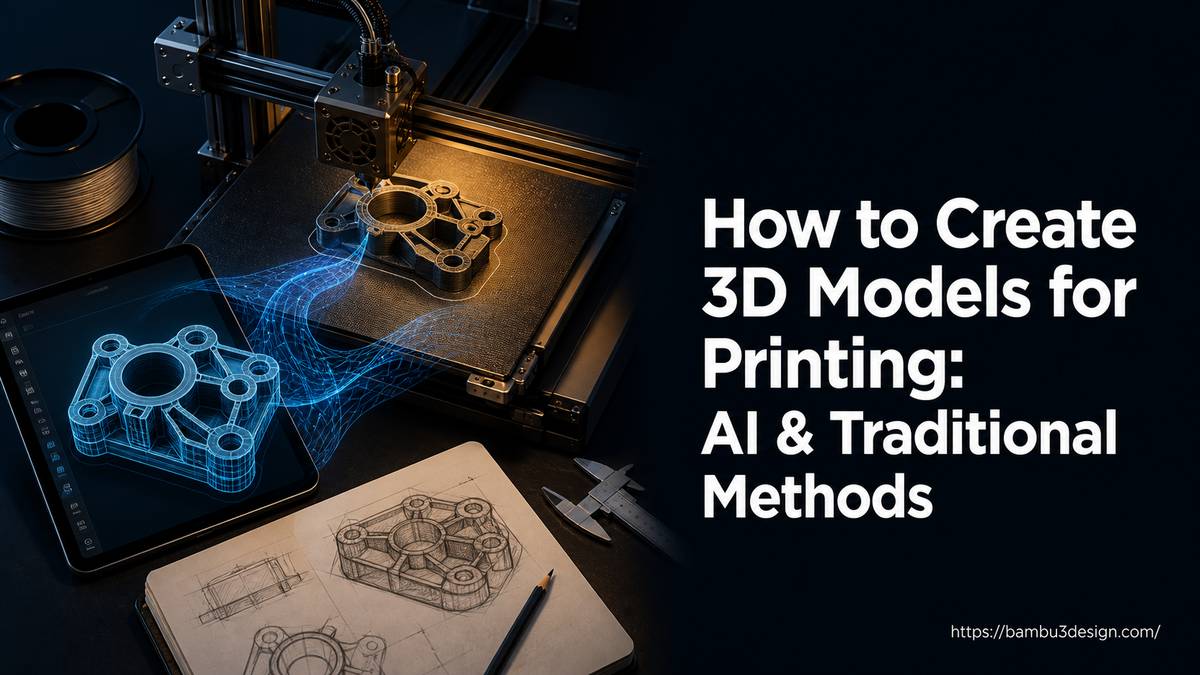
- Digital 3D Model Creation: The process begins with a digital 3D design, typically created using CAD (Computer-Aided Design) software (e.g., Fusion 360, SolidWorks, FreeCAD, Blender). These models are often saved in file formats like STL, OBJ, or 3MF.
- Slicing into 2D Cross-Sections: The 3D model is then imported into a slicer software (e.g., Bambu Studio, OrcaSlicer, Cura, PrusaSlicer). The slicer virtually “cuts” the 3D model into hundreds or thousands of thin, horizontal 2D layers or cross-sections.
- G-code Generation: The slicer then translates these 2D layers into machine-readable instructions known as G-code. G-code directs the 3D printer’s movements, temperature, material extrusion, and other parameters, effectively providing a blueprint for how to build the part layer by layer.
- Layer-by-Layer Fabrication: The 3D printer executes the G-code instructions. It deposits or solidifies material precisely according to each 2D cross-section, building the object upward from the build platform. As one layer is completed, the printer moves to the next, adding material until the object is fully formed.
Key Additive Manufacturing Technologies
While the core principle remains consistent, various technologies achieve layer-by-layer material addition using different methods. The most common types include:
Fused Deposition Modeling (FDM) / Fused Filament Fabrication (FFF)
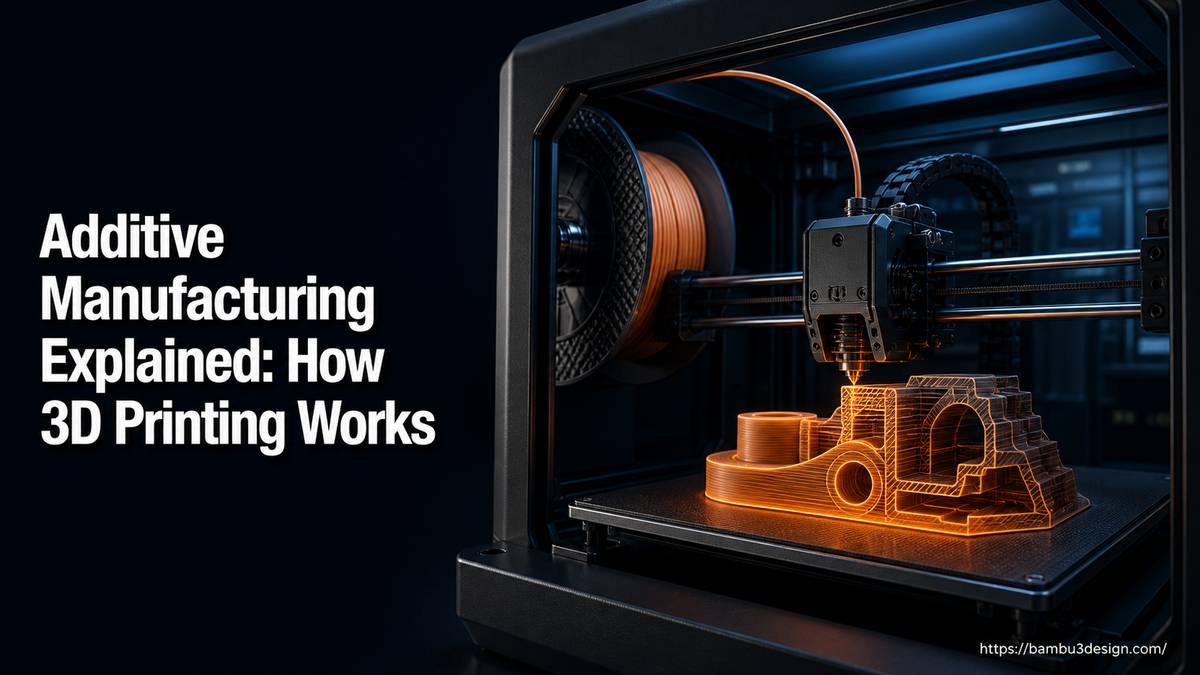
FDM, also known as FFF, is the most widespread 3D printing technology, particularly in consumer and prosumer machines (like those from Bambu Lab, Creality, and Prusa). It operates by:
- Filament Feeding: A spool of thermoplastic filament (the material) is fed into the printer.
- Heating and Extrusion: The filament passes through a heated nozzle (part of the extruder or hot end), melting it to a semi-liquid state.
- Layer Deposition: The nozzle moves across the build platform, depositing the molten material in precise paths according to the G-code. As the material cools, it solidifies and bonds to the previous layer.
- Layer Building: The build platform or nozzle then moves incrementally (usually downwards) for the next layer to be deposited, continuing until the print is complete.
FDM printers are popular for their relative affordability, ease of use, and a wide range of compatible materials.
Other Common Additive Manufacturing Methods
While FDM is prevalent, several other technologies are crucial for different applications and materials:
- Stereolithography (SLA): Uses a UV laser to cure liquid photopolymer resin, solidifying it layer by layer. Known for high detail and smooth surface finishes, often used for intricate prototypes and dental applications.
- Selective Laser Sintering (SLS): Employs a high-power laser to selectively fuse small particles of powdered material (typically nylon) into a solid structure. SLS produces strong, functional parts with no need for support structures, making it ideal for complex, interlocking designs.
- Multi Jet Fusion (MJF): A powder-bed fusion technology developed by HP that uses an inkjet array to apply fusing and detailing agents across a bed of powdered material, which is then fused by heating elements. MJF offers excellent mechanical properties and high production speeds.
- Material Jetting: Similar to an inkjet printer, this method jets droplets of photopolymer material onto a build platform and then cures them with UV light.
- Binder Jetting: Involves jetting a liquid binding agent onto a powder bed (e.g., sand or metal powder) to bind particles together layer by layer.
Materials in Additive Manufacturing
The choice of material is critical and depends heavily on the specific 3D printing technology and the desired properties of the final part. Common materials include:
- Plastics (Filaments/Resins):
- PLA (Polylactic Acid): A common, easy-to-print, biodegradable plastic, ideal for beginners and aesthetic models.
- PETG (Polyethylene Terephthalate Glycol): Offers a good balance of strength, durability, and ease of printing.
- ABS (Acrylonitrile Butadiene Styrene): Known for its strength and heat resistance, but requires controlled printing environments.
- ASA (Acrylonitrile Styrene Acrylate): Similar to ABS but with better UV and weather resistance.
- TPU (Thermoplastic Polyurethane): A flexible and durable material used for rubber-like parts.
- Nylon: Strong, wear-resistant, and flexible, often used for functional parts and engineering applications.
- Carbon Fiber-reinforced Filaments: Composites that offer increased stiffness and strength, commonly used in demanding applications.
- Metals: Advanced additive manufacturing technologies can print with various metals (e.g., stainless steel, aluminum, titanium), opening doors for strong, functional industrial components in aerospace and automotive sectors.
- Other Materials: Materials like ceramics, sand (for molds), and even certain biocompatible resins are used in specialized additive manufacturing processes.
Advantages of Additive Manufacturing
Additive manufacturing provides several compelling benefits across various industries:
- Design Freedom: The ability to create highly complex geometries, internal structures, and organic shapes that are difficult or impossible with traditional manufacturing.
- Rapid Prototyping: Significantly reduces the time and cost associated with developing and testing new product designs.
- Customization and Personalization: Each part can be unique or tailored to specific requirements without incurring additional tooling costs.
- On-Demand Production: Enables just-in-time manufacturing, reducing inventory and lead times.
- Part Consolidation: Complex assemblies can be designed as a single 3D-printed component, reducing part counts and simplifying supply chains.
- Reduced Material Waste: Unlike subtractive methods, additive processes typically generate less material waste.
- Cost-Effectiveness for Low Volume: Ideal for producing small batches or one-off parts economically, as unit cost is less dependent on production volume.
Cost Considerations in 3D Printing
The cost of a 3D-printed part is primarily influenced by:
- Material Volume: The amount of material consumed directly impacts cost.
- Print Speed: Longer print times, often due to intricate designs or high-resolution settings, can increase costs.
- Part Size: Larger parts generally require more material and longer print times.
- Post-Processing: Any finishing steps, such as sanding, painting, or support removal, add to the overall cost.
Crucially, the complexity of a design typically does not significantly increase the cost of a 3D-printed part, unlike traditional manufacturing where complex molds or machining operations can be very expensive.
Conclusion
Additive manufacturing, or 3D printing, represents a fundamental shift in how products are designed and brought to life. By understanding the core principle of layer-by-layer construction, the various technologies involved, and the broad spectrum of materials available, both enthusiasts and professionals can leverage its immense potential. From rapid prototyping and customized consumer goods to advanced industrial components, additive manufacturing is continuously evolving, driving innovation across countless sectors and empowering creators to realize their digital visions in the physical world.