The demand for high-performance materials in advanced manufacturing continues to grow, pushing the boundaries of what’s possible with 3D printing. Among these materials, titanium stands out as a critical element, especially in sectors requiring exceptional strength-to-weight ratios, corrosion resistance, and biocompatibility. As industries like aerospace, defense, and medical devices increasingly adopt additive manufacturing, the need for a robust, reliable, and domestically sourced titanium supply chain becomes paramount.
This article delves into the significance of titanium in 3D printing, exploring its unique advantages, the innovative technologies driving its production, and the strategic importance of developing an American titanium supply chain for advanced manufacturing.
The Unique Advantages of Titanium in Additive Manufacturing
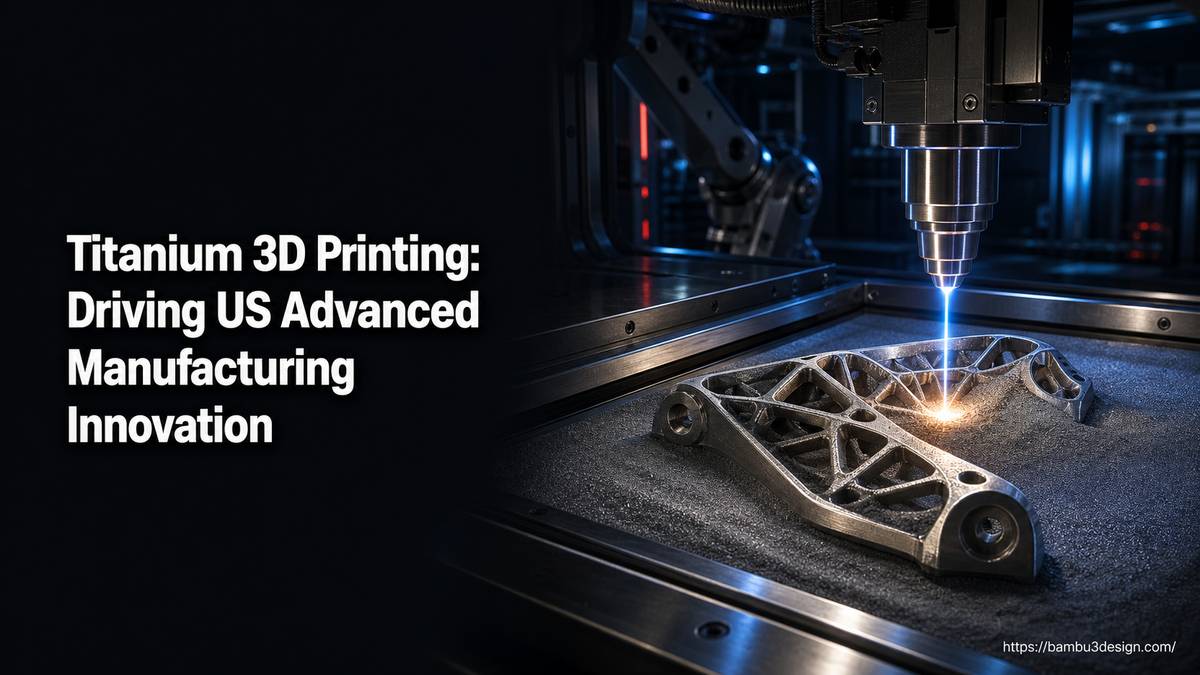
Titanium is an extraordinary metal, prized for a combination of properties that make it ideal for demanding applications. When processed through additive manufacturing, these characteristics are further enhanced, allowing for complex geometries and optimized structures not achievable with traditional methods.
Key properties that make titanium highly desirable for 3D printing include:
- High Strength-to-Weight Ratio: Titanium alloys offer exceptional strength while being significantly lighter than many other metals, making them perfect for weight-sensitive applications in aerospace and automotive industries.
- Excellent Corrosion Resistance: Titanium naturally forms a passive oxide layer, providing superior resistance to corrosion in harsh environments, including saltwater and various chemicals.
- Biocompatibility: This property makes titanium an ideal material for medical implants, prosthetics, and surgical instruments, as it is well-tolerated by the human body.
- High Temperature Performance: Certain titanium alloys retain their mechanical properties at elevated temperatures, crucial for components in engines and energy systems.
- Design Freedom: 3D printing allows for the creation of intricate, lightweight lattice structures and organic forms that maximize titanium’s inherent properties, leading to performance improvements and material efficiency.
IperionX: Advancing the American Titanium Supply Chain
IperionX Limited is an American titanium metal and critical materials company positioned at the forefront of establishing a vertically integrated, domestic titanium supply chain. Its strategy focuses on producing high-performance titanium alloys from titanium minerals or scrap feedstock, emphasizing lower energy consumption, reduced costs, and a smaller carbon footprint compared to traditional methods.
IperionX’s operations span Tennessee, Virginia, and Utah, aligning its legal and capital-markets framework with its U.S.-based titanium minerals, titanium metal, and advanced manufacturing activities. This strategic focus aims to support U.S. customers and government-supported programs, enhancing the reliability and security of critical material supplies.
Proprietary Technologies for Efficient Titanium Production
IperionX utilizes patented metal technologies to produce its titanium materials and components. Two key proprietary processes are central to its operations:
- Hydrogen Assisted Metallothermic Reduction (HAMR): This titanium production technology is described as enabling the creation of titanium metal powders with lower energy intensity and projected unit costs. The HAMR process has reinforced the low-capex, modular scalability of titanium powder production.
- Hydrogen Sintering & Phase Transformation (HSPT): These forging systems facilitate the creation of near-net-shape and forged titanium components directly from titanium minerals or scrap feedstock. This approach significantly reduces waste and post-processing, contributing to efficiency gains.
Vertical Integration and Manufacturing Capabilities
IperionX’s Titanium Manufacturing Campus in Virginia exemplifies its vertically integrated approach. The campus features all major scrap-to-forged titanium manufacturing equipment online and operational, encompassing:
- Titanium powder production: Utilizing the HAMR process, the campus has increased its nameplate titanium powder capacity.
- Powder metallurgy systems: For processing titanium powders into specific forms.
- Forging systems: Employing HSPT technology to create robust, high-performance titanium components.
This comprehensive capability allows IperionX to produce a range of titanium components, including fasteners and other parts, for critical applications across various U.S. markets, including military, commercial, industrial, and consumer electronics.
Furthermore, the company controls the Titan Critical Minerals Project in Tennessee, which is described as the largest JORC-compliant mineral resource of titanium, rare earth, and zircon mineral sands in the United States. This permitted multi-decade resource provides a foundational domestic source of critical minerals, further securing the supply chain.
Precision Metal Powders: The Foundation of Metal AM
The quality of metal powders is paramount for successful metal additive manufacturing. High-performance metal powders are custom-designed for AM industries, ensuring precision, performance, and innovation in the final printed part. Companies specializing in metal powder technology continually push the boundaries in R&D to meet the demanding requirements of advanced manufacturing.
Key characteristics defining high-performance metal powders include:
- Excellent Fillability: Optimal material distribution within the print bed is crucial for consistent part density and mechanical properties. Powders designed for excellent fillability ensure uniform layering.
- Superior Lubrication: Proper lubrication within the powder system and during compaction processes ensures smooth operations, extends machinery life, and prevents powder agglomeration.
- Efficient Compaction: Achieving higher apparent density during compaction leads to more consistent, higher-quality products. Powders engineered for efficient compaction improve productivity, especially for complex or taller parts with narrow sections.
- Custom Alloys: The ability to produce custom alloys allows manufacturers to tailor material properties precisely to specific application requirements, whether for high-strength, high-temperature, or unique performance demands.
The development of these specialized metal powders is a critical enabler for the expanding world of metal powder use in industries ranging from aerospace and medical to energy and industrial markets.
Building a Resilient Domestic Titanium Supply Chain
The strategic importance of developing a domestic titanium supply chain cannot be overstated, particularly for a nation’s industrial base and national security. The efforts by companies like IperionX to redomicile and focus on U.S. operations directly address this need.
Key benefits of a robust, domestic titanium supply chain include:
- Enhanced National Security: Critical materials like titanium are essential for defense and aerospace applications. A domestic supply reduces reliance on foreign sources, mitigating geopolitical risks and ensuring continuous access for national security interests.
- Economic Resilience: Onshoring manufacturing and raw material processing creates jobs, stimulates economic growth, and fosters innovation within the country. It reduces vulnerabilities to global supply chain disruptions.
- Quality Control and Consistency: Domestic production allows for tighter control over material quality, manufacturing processes, and adherence to specific industry standards, crucial for high-reliability components.
- Innovation and R&D: A localized supply chain encourages collaboration between material producers, equipment manufacturers, and end-users, accelerating research and development in additive manufacturing technologies and new material formulations.
This move towards an American titanium supply chain is part of a broader trend to strengthen the domestic industrial base, making it more self-reliant and competitive in advanced manufacturing.
Conclusion
Titanium 3D printing represents a significant leap forward in advanced manufacturing, enabling the creation of components with unparalleled performance characteristics for demanding industries. The ongoing innovations in titanium powder production and additive manufacturing technologies are continually expanding its potential.
Crucially, the development of a resilient, vertically integrated domestic titanium supply chain, championed by companies like IperionX, is vital for ensuring long-term access to this critical material. By fostering U.S.-based operations, from mineral extraction to finished components, the nation strengthens its economic security, enhances its defense capabilities, and cements its position at the forefront of global advanced manufacturing innovation. The future of high-performance manufacturing is undoubtedly being shaped by the strategic integration of titanium 3D printing and a robust domestic supply network.